Trailer Made Custom Trailers

Trailer Made Custom Trailer Logo

What Materials Are Used in Trailer Construction? (And Why It Matters More Than You Think)

tiny homes

If you’re researching trailer construction, you’re already ahead of most people.

But here’s where almost everyone gets it wrong:

They focus on the outside.
The look. The price. The finish.

Not the materials.

And that’s the mistake.

Because when it comes to trailers—especially for tiny homes, ADUs, or heavy-duty hauling—the materials are what determine whether your investment lasts… or fails.

Let’s break down what actually goes into a properly built trailer—and why Trailer Made does it differently.

legal tiny house

The Truth About Trailer Construction

Most people think trailer construction is simple:

Steel + wheels + done.

It’s not.

A properly built trailer has to balance:

  • Structural strength
  • Weight distribution
  • Corrosion resistance
  • Long-term durability

Miss one of those?

You won’t notice immediately.

But you will—eventually.

Steel: The Backbone of a Real Trailer

Let’s start with the foundation.

Steel is the core of any serious trailer build—but not all steel is created equal.

Why Steel Quality Matters

High-quality steel:

In proper trailer construction, you should be getting structural-grade steel, not recycled or inconsistent materials.

  • Maintains shape under heavy loads
  • Resists fatigue over time
  • Handles dynamic stress during transport

Low-quality steel?

  • Flexes under load
  • Develops stress fractures
  • Fails prematurely

And if you’re building a tiny home or ADU, that failure isn’t just inconvenient—it’s catastrophic.

Engineering: Where Most Trailers Fail

Here’s the part most companies don’t want to talk about.

It’s not just the material—it’s how it’s engineered.

A properly engineered trailer:

  • Distributes weight evenly across axles
  • Handles dynamic movement (not just parked loads)
  • Eliminates long-term stress points

This is where the difference shows between:

  • A true manufacturer
  • And a shop just welding steel together

Engineering is what makes a trailer last 10+ years instead of 2–3.

Aluminum: Useful, But Not a Replacement

Aluminum gets a lot of attention—and for good reason.

It’s:

  • Lightweight
  • Corrosion-resistant
  • Efficient for smaller builds

But here’s the honest truth:

Aluminum is not a universal upgrade.

It works well for:

  • Light-duty trailers
  • Smaller utility builds

But for:

  • Tiny homes
  • ADUs
  • Heavy structural loads

👉 Steel still wins.

If someone tells you aluminum is always better, they’re selling—not engineering.

Pressure-Treated Wood (Still a Standard)

Wood decking is still widely used—and for good reason.

It’s:

  • Durable when treated properly
  • Cost-effective
  • Easy to replace

But cheap wood?

  • Absorbs moisture
  • Warps
  • Breaks down quickly

Quality matters here just as much as anywhere else.

Composite Materials (Modern Upgrade)

Composite decking is becoming more common in premium builds.

It offers:

  • Better resistance to rot and moisture
  • Longer lifespan than wood
  • Reduced maintenance

But it comes at a higher cost.

For the right build, it’s worth it.

Welding, Fasteners, and Hardware (The Hidden Failure Points)

This is where a lot of trailers quietly fail.

Not because of the steel.
Not because of the design.

Because of:

  • Poor weld penetration
  • Weak joints
  • Low-quality fasteners

What to Look For

  • Clean, deep welds (not surface welds)
  • Reinforced stress points
  • Corrosion-resistant hardware

Bad welds are one of the #1 causes of trailer failure.

And you won’t see it until it’s too late.

Axles, Suspension, and Undercarriage

This is where performance lives.

A properly built trailer includes:

  • Correctly rated axles (not undersized)
  • Reliable braking systems
  • Durable suspension setups

Cheap setups lead to:

  • Uneven tire wear
  • Poor handling
  • Reduced stability

If you’re hauling weight—or moving your build—this matters more than anything.

Protective Coatings: The Long-Term Difference

Even the best materials fail without protection.

That’s why coatings matter.

Common High-Quality Options:

  • Powder coating
  • Galvanization
  • Industrial-grade paint systems

These prevent:

  • Rust
  • Corrosion
  • Environmental wear

A trailer without proper coating might look fine at delivery.

Give it a year or two.

Interior Materials (For Enclosed Trailers & ADUs)

If you’re building:

  • An enclosed trailer
  • A mobile office
  • A tiny home or ADU

Interior materials matter too.

You’ll typically see:

  • Insulated wall systems
  • Composite or plywood panels
  • Steel or aluminum framing

For these builds, durability and insulation performance are just as important as weight.

Why Engineered Trailers Matter (This Is the Big One)

Let’s be clear:

Anyone can build a trailer.

Very few can engineer one properly.

That means:

  • Load calculations
  • Structural design
  • Real-world stress testing

That’s the difference between:

  • A trailer that lasts a few years
  • And one that holds up long-term

Yes—it costs more upfront.

But replacing a failed trailer costs a lot more.

The Real Cost of Cutting Corners

Cheap trailers are everywhere.

They look good.
They’re priced right.
They sell fast.

Until:

  • The frame flexes
  • Rust shows up early
  • Welds start cracking

Then you’re repairing—or replacing.

And that’s where the real cost hits.

Why Trailer Made Custom Trailers Is Built Differently

At Trailer Made, we don’t build trailers for appearance—we build them for performance.

That means:

  • Engineered steel frames
  • Purpose-built designs for tiny homes and ADUs
  • High-quality fabrication standards
  • No shortcuts on structural components

We’ve built thousands of units, and we’ve seen what fails.

So we don’t build that way.

Ready to Build a Trailer That Actually Lasts?

If you’re serious about:

  • Tiny homes
  • ADUs
  • Custom trailer builds

Start with the part that matters most—the foundation.

👉 Visit Trailer Made Custom Trailers to get a quote
👉 Watch our factory tour to see how these are actually built

Don’t overcomplicate it.

Just don’t cut corners on the one thing everything depends on.

What to Ask Before Choosing Trailer Manufacturers in Colorado (If You’re Building a Tiny Home or ADU)

trailer manufacturers in Colorado

If you’re serious about building a tiny home, ADU, or backyard living space, there’s one thing you need to understand upfront:

Your build is only as good as the trailer under it.

Not the siding.
Not the windows.
Not the Pinterest board you’ve been saving for six months.

The foundation—your trailer—is what determines whether your project succeeds… or becomes an expensive mistake.

And here’s the reality:

Most people don’t realize this until it’s too late.

So before you start comparing trailer manufacturers in Colorado or anywhere in the U.S., you need to ask the right questions.

Because the wrong choice doesn’t just cost money—it can cost you the entire build.

trailer manufacturers in Colorado

Why Trailer Manufacturers Matter More Than You Think

There’s a massive difference between:

  • A true engineered trailer manufacturer
  • And a local welding shop with a website

Both will tell you they can build your trailer.

Only one is building something your home can safely live on for decades.

Your trailer controls:

  • Weight distribution
  • Road safety
  • Structural integrity
  • Long-term durability

If that foundation fails, nothing above it matters.

Question #1: Is the Trailer Actually Engineered?

This is the most important question you can ask.

Anyone can weld steel together.

That does NOT mean it’s engineered.

A legitimate manufacturer should provide:

  • Engineered plans (P.E. stamped if needed)
  • Load calculations
  • Axle placement design
  • Structural support strategy for your home

If they can’t clearly explain how their trailer handles:

  • wall loads
  • roof loads
  • appliance weight
  • dynamic forces during transport

👉 Walk away.

Because once your house is built, fixing a bad trailer is nearly impossible.

Question #2: What Materials Are You Using?

This is where cheap builds start to show.

Ask:

  • What grade of steel are you using?
  • What thickness?
  • What corrosion protection is applied?

In Colorado especially, you’re dealing with:

  • snow loads
  • freeze/thaw cycles
  • moisture exposure

Low-quality steel = long-term failure.

A real manufacturer will answer this in detail.

If the answer is vague? That’s a red flag.

Question #3: Do You Specialize in Tiny Homes and ADUs?

Here’s something most people miss:

Not all trailer companies understand houses.
And not all home builders understand trailers.

You need both.

A proper tiny home or ADU trailer must account for:

  • Plumbing runs through the frame
  • Insulation thickness (especially spray foam systems)
  • Wall load points
  • Electrical routing
  • Appliance weight shifts

A generic flatbed trailer is NOT designed for this.

That’s where builds start to fail.

Question #4: Can You Show Real Builds (Not Just Finished Homes)?

Anyone can show pretty photos of finished tiny homes.

That’s not what you want to see.

Ask for:

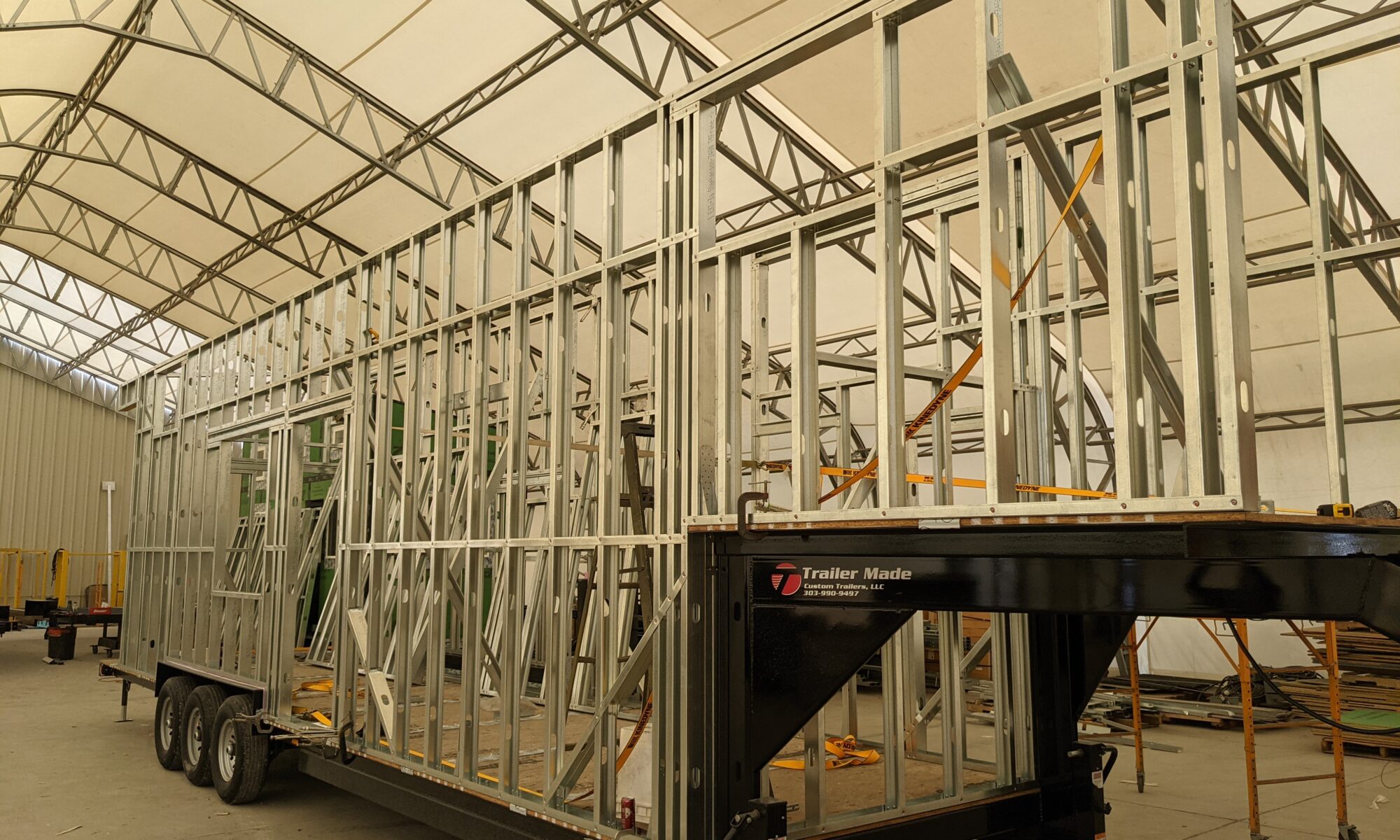
  • Bare trailer builds
  • Frame structure
  • Undercarriage details
  • Weld quality

That’s where the truth is.

If they’ve built thousands of units, they should have:

  • real customer builds
  • real-world applications
  • long-term performance examples

Question #5: What’s the REAL Lead Time?

Let’s be honest—lead times get stretched all the time.

So don’t just ask:
👉 “How long does it take?”

Ask:

  • What delays have you experienced before?
  • What’s the worst-case timeline?
  • What impacts production time?

A professional manufacturer will give you a realistic window.

“Fast and easy” usually means corners are being cut somewhere.

Question #6: What Axles and Suspension Are You Using?

This is where safety lives.

A properly built trailer will include:

  • Correctly rated axles (not “close enough”)
  • Reliable braking systems
  • Proper suspension design (leaf vs torsion, based on use)

If you plan to move your home even once, this matters.

A lot.

If the answer is:
👉 “It’ll handle it”

That’s not an answer.

Question #7: Is This Built for Long-Term Use or Just Delivery?

There are two types of trailers:

  1. Delivery-only trailers
  2. Long-term, road-ready foundations

You want the second one.

Even if you never plan to move your home.

Because life changes.

And a weak foundation limits your options.

Question #8: Can the Trailer Be Customized for My Build?

Your home is custom.

Your trailer should be too.

A serious manufacturer will adjust:

  • Length
  • Width
  • Axle placement
  • Hitch configuration
  • Structural reinforcements

If you’re being pushed into “standard sizes only,” you’re not getting a true solution.

Question #9: What Happens If Something Goes Wrong?

This is where reputations are built.

Ask:

  • What warranty is included?
  • What support exists after delivery?
  • How are issues handled?

A real manufacturer stands behind their work.

No hesitation.

The Truth About Cutting Corners

This is where people get burned.

Trying to save a few thousand dollars on a trailer can lead to:

  • Structural failure
  • Unsafe towing
  • Costly repairs
  • Full rebuilds

And yes—this happens more often than people admit.

A properly engineered trailer is not optional.

It’s the foundation of everything.

Why Trailer Made Custom Trailers Is Different

At Trailer Made, we’re not guessing.

We’ve:

  • Built thousands of tiny house trailers
  • Helped define industry standards
  • Worked with builders, DIYers, and large-scale projects nationwide

Every trailer we build is:

  • Engineered for tiny homes and ADUs
  • Designed for real-world use
  • Backed by experience—not theory

Because we’ve seen what fails.

And we don’t build that way.

Ready to Start Your Build the Right Way?

If you’re serious about building a tiny home, ADU, or custom project, start with a foundation that’s engineered for it.

👉 Visit Trailer Made Custom Trailers to get a quote
👉 Or watch our factory tour to see how these are actually built

Don’t overthink it.

Just don’t cut corners on the one thing holding everything up.

What Are the Building Codes for a Legal Tiny House on Wheels?

legal tiny house

Tiny homes look simple. Small footprint. Lower cost. Freedom to move around. Sounds great on paper.

But here’s the part most people don’t realize until they’re halfway into a build: a legal tiny home isn’t just about building something small and putting it on wheels. There are actual rules. Building codes. Zoning issues. Trailer requirements. And yeah… it gets confusing fast.

I’ve seen people spend months building a beautiful tiny house only to find out it’s not technically legal where they live. That’s a painful lesson.

So let’s break this down in simple language. Just the stuff you actually need to know if you’re planning a code-compliant tiny home that won’t cause headaches later.

legal tiny home

Understanding What Makes a Tiny House Legal

The short answer is this: a fully legal tiny home has to meet both building codes and zoning laws.

Those are two different things. And they get mixed up all the time.

Building codes focus on how the structure is built safely, including electrical, plumbing, insulation, exits, ceiling height, and that kind of stuff.

Zoning, on the other hand, determines where the home can legally sit.

You could build a perfectly engineered, approved tiny house, but if your area isn’t zoned for it, you still might not be allowed to park it there.

Frustrating, yeah. But that’s the reality.

Tiny Home Regulations Are Different Everywhere

Here’s where things get messy.

Tiny home regulations vary wildly depending on the city, county, and state. What works in one town might be illegal two miles down the road.

Take Colorado as an example.

People often ask, “Are tiny homes legal in Colorado?”

The answer is… sometimes.

Some Colorado towns fully support tiny homes and even have tiny house communities. Others still classify them as RVs. And a few places just flat-out don’t allow them.

So before you start building anything, step one is always checking local rules.

It’s not the fun part of the process, but skipping it can cause serious problems later.

Building Codes for Tiny Houses on Wheels

Now, let’s talk about building codes for tiny houses specifically.

Tiny houses on wheels usually fall under one of three categories:

  1. RV classification
  2. Accessory Dwelling Unit (ADU)
  3. Park model home

Each category has different standards.

A lot of builders aim for RV certification because it allows mobility. But if you’re planning to live in the home full-time, many areas push toward ADU rules instead.

That means stricter building codes for tiny homes, similar to traditional housing.

Common requirements include:

  • Minimum ceiling heights
  • Emergency exit windows
  • Proper stair design for lofts
  • Insulation standards
  • Electrical and plumbing compliance

It’s not just about making the house livable. It’s about making it safe.

legal tiny home

The Trailer Is the foundation. 

Let’s talk about something people overlook all the time.

The trailer.

Truth is… the trailer is the foundation of your tiny home. And if that foundation fails, the whole house is at risk.

Cheap trailers are everywhere online. They look similar in photos. But they’re not engineered for the weight and structural demands of a tiny house.

And that’s where people get burned.

A proper tiny home build needs a fully engineered trailer designed specifically for tiny houses. Weight distribution, steel thickness, axle ratings, tie-down points, it all matters.

This is exactly why experienced builders rely on companies like Trailer Made Custom Trailers.

Our trailers are engineered specifically for tiny houses, not generic cargo loads. That difference matters long-term.

Cutting corners on the trailer is one of the biggest mistakes new builders make. It might save money upfront… but it can cause structural problems later.

And fixing a foundation issue under a finished tiny house? Not fun.

Codes for a Legal Tiny House Interior

Once the trailer and frame are solid, the interior must also meet the codes for a legal tiny house.

Here are some of the most common rules that show up across jurisdictions.

Ceiling Height

Most code-compliant tiny homes require the following:

  • 6’8” minimum in main living areas
  • Lofts can be shorter, but must still allow safe movement

Some areas allow exceptions for tiny homes, but not always.

Emergency Exits

Lofts must have an emergency exit window.

This isn’t optional.

The idea is simple: if there’s a fire blocking the staircase, occupants still have a way out.

Staircases and Ladders

Building codes usually reject standard ladders for primary loft access.

Instead, they require:

  • Proper stair treads
  • Handrails
  • Safe angles

Some tiny house builders get creative with storage stairs that satisfy both space and safety requirements.

Insulation and Energy Codes

Many areas now require tiny homes to meet energy efficiency standards similar to traditional homes.

That means:

  • Wall insulation
  • Roof insulation
  • Proper vapor barriers
  • Energy-rated windows

This part often gets overlooked in DIY builds.

But if you want a fully legal tiny home, insulation matters more than people realize.

Zoned Tiny House vs Mobile Tiny House

Another thing people mix up is zoning categories.

A zoned tiny house typically refers to a tiny home that’s allowed within a residential zoning district. Often as an ADU.

These homes are usually placed on foundations.

Tiny houses on wheels sit in a grey area. Some towns treat them like RVs. Others require them to stay in RV parks or tiny home communities.

Again… the rules vary.

The important thing is understanding your local regulations before building.

Why Many Tiny Houses Fail Inspections

A lot of tiny homes online look amazing. Instagram-ready. Beautiful finishes.

But many of them wouldn’t pass inspection.

Here’s why:

  • Non-engineered trailers
  • Improper wiring
  • Unsafe loft access
  • No emergency exits
  • Structural weight problems

The truth is, aesthetics don’t equal compliance.

A real approved tiny house is built with safety and code requirements in mind from day one.

Planning a Code-Compliant Tiny Home the Right Way

If you’re serious about building a legal tiny home, the process usually looks like this:

  1. Research local zoning rules
  2. Understand building codes for tiny homes in your area
  3. Start with an engineered trailer foundation
  4. Design with code compliance in mind
  5. Work with experienced builders when possible

Skipping any of these steps can turn into a problem later.

Tiny houses may be small, but the planning behind them isn’t.

The Truth About Cheap Tiny Home Builds

Let’s address the elephant in the room.

Everyone wants to build a tiny house cheaply.

And yeah… tiny homes can cost less than traditional houses. But the ultra-cheap builds you see online often cut corners.

Usually on the trailer. Or structural materials.

That’s risky.

Your tiny house will carry thousands of pounds of weight framing, appliances, water tanks, furniture, everything.

A properly engineered trailer is designed to handle that load safely over time.

Companies like Trailer Made Custom Trailers specialize in that exact purpose. Our designs are built specifically for tiny houses, not general hauling.

And when you’re building something meant to last decades, that foundation matters more than anything.

Final Thoughts

Tiny homes are an incredible housing option. Lower cost. More freedom. Simpler living.

But building a legal tiny home takes planning.

You need to understand tiny home regulations, follow building codes for tiny houses, and, most importantly, start with the right foundation.

Because the truth is, a tiny house is only as strong as the trailer it sits on.

If you’re serious about building a Code-Compliant Tiny Home that lasts, start with a properly engineered trailer.

Visit Trailer Made Custom Trailers to learn more or start designing the foundation for your tiny house build.

[Request a Quote]

FAQs 

Are tiny homes legal in Colorado?

Yes, but it depends on the specific city or county. Some areas allow tiny homes as ADUs or in tiny house communities, while others classify them as RVs or restrict them entirely. Always check local zoning and building codes for tiny homes before starting a build.

What makes a fully legal tiny home?

A fully legal tiny home meets both local zoning laws and structural building codes for tiny houses. This includes proper ceiling heights, emergency exits, insulation standards, and safe electrical and plumbing systems.

Do tiny houses on wheels have building codes?

Yes. Tiny homes on wheels must still follow safety standards and codes for a legal tiny house. Many builders follow RV certification standards or local residential codes, depending on how the home will be used.

What is the most important part of a tiny house build?

The trailer foundation is critical. A tiny house requires a structurally engineered trailer designed for the weight and load distribution of a house, not a standard cargo trailer.

Can a tiny house be considered an ADU?

In many areas, yes. Some jurisdictions classify tiny homes as Accessory Dwelling Units (ADUs) if they meet local tiny home regulations and building standards. These are usually placed on permanent foundations rather than wheels.

How Tiny House Frame Kits Save Time and Reduce Construction Costs

tiny house frame kits

Tiny houses stopped being a “trend” a long time ago.

What they’ve become is one of the last realistic ways a lot of people can actually build something they own without signing up for a 30-year mortgage that looks like a second rent payment.

But the internet kind of lies about one thing.

Building a tiny house is not automatically easy.

I talk to people every week who say something like:

“I’m just going to build it myself.”

Which is great. I love that mindset.

But framing a structure that’s going to last decades — and especially one that’s going down the highway at 65 mph — isn’t the same thing as building a garden shed.

That’s where tiny house frame kits come into the picture.

They don’t magically build the house for you, but they remove a lot of the places where people usually get into trouble.

And trust me… there are plenty.

First Things First — What Is a Tiny House Frame Kit?

Think of a tiny house frame kit as the skeleton of the structure.

The bones.

Instead of starting with raw lumber and a tape measure hoping you got the math right, a frame kit gives you a structure that has already been engineered.

The walls line up.

The roof loads make sense.

The connection points actually support the weight they’re supposed to support.

Which sounds obvious… but you’d be surprised how often it goes wrong when people try to design the whole thing themselves.

Some tiny house kits are meant for permanent foundations.

Others are designed to work with trailers.

That distinction matters a lot more than most blogs will admit.

Because when the trailer and the structure aren’t engineered together… the problems show up later.

Sometimes years later.

Why DIY Tiny House Kits Exist in the First Place

Traditional construction is slow.

And messy.

And full of small mistakes that turn into expensive problems.

You’re ordering materials.

Waiting on deliveries.

Cutting things wrong.

Driving back to the lumber yard again.

And again.

With DIY tiny house kits, a lot of that chaos disappears.

The design work is already done.

The framing layout makes sense.

You’re not inventing the structure as you go along.

For most people, that’s the difference between a project that actually gets finished… and one that sits half-built in the backyard for three years.

And yeah, that happens more than people want to admit.

Where Tiny House Kits Actually Save Time

People usually underestimate how much time framing alone takes.

You’re measuring angles.

Cutting pieces.

Trying to keep walls square.

Figuring out roof geometry.

Now multiply that by every wall and every connection in the house.

When you start with tiny house frame kits or prefab tiny house kits, the complicated parts are already solved.

You’re assembling a structure instead of designing one.

Most builders who switch to tiny house kit homes end up shaving weeks off the build timeline.

Sometimes more.

And time is money, whether you’re a DIY builder or a contractor.

The Money Side — Why Kits Reduce Construction Costs

Saving time helps.

But the real benefit usually shows up in the budget.

Building from scratch sounds cheaper until you start fixing mistakes.

Here’s where tiny house kits quietly save people a lot of money.

Less Material Waste

When you’re cutting everything yourself, mistakes happen.

Boards get cut short.

Pieces get replaced.

You end up buying more materials than you planned.

With tiny cabin kits or small house building kits, materials are already calculated.

That means less waste.

And fewer trips to the hardware store.

Fewer Structural Mistakes

This is the one that gets expensive.

Framing errors don’t always show up immediately.

Sometimes they show up six months later when a door doesn’t close right.

Or when the roof starts sagging a little.

A properly engineered tiny house kit solves most of those problems before the first wall goes up.

Everything is designed to work together.

The loads make sense.

That’s kind of the whole point.

Lower Labor Costs

Most people building tiny houses aren’t contractors.

They’re figuring it out as they go.

When you use DIY tiny house kits, the structure is easier to assemble, which means you don’t need as much specialized labor.

And labor is one of the most expensive parts of any build.

So simplifying the structure usually lowers the overall cost.

Let’s Talk About the Part Everyone Ignores

The trailer.

If you’re building a movable tiny house, the trailer is not just something that moves the house.

It is the foundation.

And this is where people get themselves in trouble.

I can’t tell you how many times someone calls and says something like:

“I found a trailer on Craigslist. Will this work?”

Usually the answer is no.

Utility trailers are not designed for houses.

Tiny houses require engineered trailers built specifically for housing loads.

The weight distribution is different.

The steel structure is different.

The load paths are different.

If that foundation fails, the entire house fails with it.

Why Engineered Tiny House Trailers Matter

  • People focus on the fun stuff.
  • Solar panels.
  • Windows.
  • Interior design.

But the structure underneath the house is what determines whether the house lasts thirty years… or develops problems in five.

An engineered tiny house trailer should provide:

  • Proper axle placement for weight balance
  • Steel designed for housing loads
  • Connection points for framing
  • Long-term durability during transport

At Trailer Made, that’s what we build every day.

Because if the base of the structure isn’t right, nothing above it will be either.

Tiny House Kits vs Building Everything From Scratch

There’s nothing wrong with building a house completely from scratch.

If you have the experience and the time, it can be a great project.

But it’s slower.

And easier to mess up.

Tiny house frame kits give people a middle ground.

You still get flexibility.

But the complicated engineering is already handled.

Which makes the entire process a lot less frustrating.

Who Tiny House Frame Kits Make the Most Sense For

Not every builder needs a kit.

But they’re a smart option for a lot of people.

First-time builders especially.

If you’ve never framed a structure before, starting with DIY tiny house kits makes the project far more manageable.

Off-grid builders also use tiny cabin kits a lot because hauling loose materials into remote areas can be a nightmare.

And developers building backyard homes or ADUs often use small house building kits to speed up their timelines.

Time matters when you’re building multiple units.

One Last Thing About Quality

Cheap construction almost always costs more in the long run.

A poorly designed frame can cause structural issues.

A weak trailer can lead to cracked walls and uneven floors.

And once the house is finished, fixing those problems becomes complicated.

That’s why the foundation and the structural engineering matter so much.

Starting with a properly engineered tiny house frame kit and the right trailer foundation sets the entire build up for success.

Cutting corners here usually doesn’t work out.

The Bottom Line

Tiny houses give people something they’re struggling to find right now.

Affordability.

Flexibility.

A simpler way to live.

But building one still requires good planning.

Tiny house frame kits and DIY tiny house kits make the process faster and more predictable by removing a lot of the structural guesswork.

  • They reduce waste.
  • They reduce mistakes.
  • They speed up the timeline.
  • But if your tiny house is going on wheels, remember this:
  • The trailer is the foundation.
  • Choose that part carefully.

Start Your Tiny House Build the Right Way

If you’re building a tiny house on wheels, don’t gamble on the most important part of the structure.

Trailer Made Custom Trailers builds engineered tiny house trailers designed specifically for housing loads and long-term structural durability.

Take a look at our designs and start your project with the right foundation.
Request Trailer Quote

How to Choose the Right Tiny House Trailer for Your Build

legal tiny house

There’s a mistake a lot of people make when building a tiny house.

They spend months thinking about the house.

  • The layout.
  • The loft.
  • The kitchen.
  • Solar panels.
  • Cabinets.

Then they go buy the cheapest trailer they can find.

That’s backwards.

If your tiny house is going on wheels, the trailer is not just transportation. It’s the foundation of the entire structure. And if the foundation isn’t right, nothing above it will be either.

I’ve seen houses with cracked walls, sagging floors, doors that won’t close… all because the trailer wasn’t designed for the job.

So before you start framing walls or ordering a tiny house frame kit, you need to understand what actually matters in a tiny house trailer.

Let’s talk about it.

tiny house trailer

Not All Trailers Are Built for Houses

A lot of people assume a utility trailer will work fine.

Technically, you can build a tiny house on one.

But it’s usually not a good idea.

Utility trailers are designed to haul equipment or materials for short periods of time. They are not engineered to carry a permanent structural load 24 hours a day for the next 30 years.

Tiny houses weigh a lot.

Between framing, insulation, interior finishes, appliances, and furniture, it adds up fast.

An engineered tiny house trailer is designed specifically for those loads.

Different steel.
Different frame structure.
Different axle placement.

Those details matter more than people think.

Weight Distribution Is Everything

One of the biggest engineering challenges in tiny house construction is weight balance.

If the axles are placed incorrectly, the house will tow poorly and can create serious structural stress.

Too much weight in the wrong place and you end up with:

  • Frame flex
  • Uneven tire wear
  • Dangerous towing behavior
  • Long-term structural damage

A properly engineered tiny house trailer places the axles where the load needs to be supported.

This isn’t something you want to guess on.

Deck Height Matters More Than You Think

Another thing most people overlook is trailer deck height.

The higher the trailer sits off the ground, the taller the house becomes.

And when you’re trying to stay under the legal road height limit (usually around 13 feet 6 inches), every inch counts.

That’s why purpose-built tiny house trailers often use drop axles or recessed framing to keep the deck height lower.

Lower deck height means more interior headroom inside the house.

Which makes a big difference in a tiny space.

Steel Structure and Frame Strength

A tiny house trailer isn’t just a rectangle with wheels.

The frame needs to carry structural loads for decades.

That means the steel design has to support:

  • Point loads from walls
  • Distributed loads from the roof
  • Movement during transportation

Cheap trailers are often built with lighter steel that simply isn’t designed for those forces.

Over time, that leads to flex and fatigue.

Engineered trailers solve that problem by designing the frame as part of the house structure itself.

Attachment Points for the Structure

Here’s another detail most blogs never mention.

The house needs to attach to the trailer.

Securely.

An engineered tiny house trailer includes built-in connection points where the framing structure can be anchored.

Without that, builders often end up improvising attachment methods.

Improvising structural connections is never a good plan.

Why Purpose-Built Tiny House Trailers Exist

At Trailer Made Custom Trailers, we started building tiny house trailers because we saw too many houses failing on the wrong foundations.

Tiny homes are not cargo.

They’re houses.

They need a trailer engineered specifically for housing loads and long-term durability.

That’s exactly what we design.

Because when the base structure is right, the rest of the build becomes much easier.

Start With the Foundation

If you’re planning to build a tiny house on wheels, the trailer should be the first major decision you make.

Everything else — framing, insulation, layout — depends on that foundation being correct.

A properly engineered tiny house trailer gives the entire build a stable starting point.

Without it, you’re building a house on a question mark.

DIY Tiny House Kits vs Building From Scratch: What Actually Saves Money?

legal tiny house

A lot of people start their tiny house journey with the same question.

“Is it cheaper to build from scratch or buy a kit?”

The honest answer is…

It depends.

But not in the way people usually think.

Building from raw materials sounds cheaper on paper. You buy lumber, cut everything yourself, and assemble the structure piece by piece.

But that approach assumes everything goes perfectly.

And construction projects almost never go perfectly.

Let’s break down the reality of DIY tiny house kits vs traditional construction.

tiny house experts

The “Build It From Scratch” Idea

Building a tiny house completely from scratch gives you total freedom.

You can design every inch.

You can choose every material.

And if you have serious construction experience, that might be the right choice.

But most people attempting this are first-time builders.

That’s where things start getting complicated.

Framing angles, roof loads, structural connections… these things have to be correct.

Small mistakes early in the build can turn into expensive repairs later.

Where DIY Tiny House Kits Change the Equation

A DIY tiny house kit removes much of the structural guesswork.

Instead of designing the structure yourself, the engineering work has already been completed.

The framing components are planned.

The connections make sense.

And the materials are calculated ahead of time.

That changes the entire build process.

You’re assembling a structure rather than inventing one.

Material Waste Adds Up Fast

One of the hidden costs of building from scratch is material waste.

Boards get cut wrong.

Pieces get replaced.

Sometimes entire sections of framing have to be rebuilt.

With tiny house frame kits, materials are planned carefully in advance.

That dramatically reduces waste.

Which saves money and time.

Labor Is One of the Biggest Expenses

Labor costs are where construction budgets usually explode.

If the structure is complicated, you need skilled labor to build it correctly.

Tiny house kits simplify the structure enough that many DIY builders can assemble it themselves with basic help.

Less labor means lower overall costs.

And that’s where kits start becoming financially attractive.

Speed Has Financial Value Too

Construction timelines matter.

The longer a build takes, the more money gets tied up in the project.

Permits, tool rentals, temporary housing… all of it adds up.

Builders using tiny house kit homes often finish significantly faster because the structural work has already been engineered.

That time savings translates directly into cost savings.

Where Kits Make the Most Sense

DIY tiny house kits work especially well for:

First-time builders
Remote or off-grid builds
ADU development projects
People building multiple units

The structure becomes predictable and repeatable.

Which is a big advantage.

Don’t Forget the Foundation

Whether you build from scratch or use a kit, one thing stays the same.

The foundation matters.

For tiny houses on wheels, that means the trailer.

An engineered tiny house trailer ensures the structure above it has proper support and weight distribution.

Without that, even a perfectly built house can develop structural problems over time.

The Real Answer

So what actually saves money?

For experienced builders with time and tools, building from scratch can work.

For most people, though, DIY tiny house kits and frame kits reduce mistakes, speed up construction, and lower overall costs.

The engineering is already done.

Which lets you focus on actually building the house.

And finishing it.

Why Tiny Experienced Home Builders Make a Big Difference for Homes

legal tiny house

Look, building a tiny house isn’t some weekend craft project. People see these cute Instagram cabins and think, “Oh yeah, I could slap that together.”
But the truth is… the difference between a tiny home that lasts and one that falls apart after its first road trip usually comes down to one thing:

Experience.
The kind of experience only real tiny house experts and seasoned tiny house builders bring to the table.

And have you ever watched someone try to build a house on a trailer that wasn’t engineered for homes?
Yeah. Disaster. Wobbling floors, cracked walls, leaks. Basically, a rolling headache.

This is why companies like Trailer Made Trailers have become the “quiet pros” behind the strongest tiny homes out there.

Let’s break down why.

How To Navigate Off-Grid Living in Your Tiny House

Tiny Houses Aren’t Just Small Houses 

A tiny home has to survive things a normal house never deals with: towing stress, vibrations, temperature swings, highway wind, torque, twist, and the whole mess.

That means:

  • Every inch matters.
  • Every material choice matters.
  • Every structural decision matters way more than people expect.

Experienced tiny home builders know how these challenges play out in real life, not just on a blueprint. They’ve seen beams shift, plumbing fail, roofs flex, insulation compress… all from movement alone.

If you’re building on something as critical as a trailer, you want someone who’s done it dozens, or better yet, hundreds of times.

Why Working With Tiny House Experts? Just… Makes Life Easier

There’s a whole rabbit hole you go down when building a tiny home. Regulations, spacing, weight distribution, utilities, building codes, and tow ratings. The list is long enough to make your head spin.

Experienced builders don’t just build.
They guide.

They’ll tell you the difference between what sounds smart and what’ll actually work without causing you a migraine later.

They know, for example:

  • How heavy will your structure end up?
  • Whether your design throws off axle balance.
  • What kind of trailer frame actually supports a long-term home (not just a temporary cabin)?

And let’s be real, most people don’t know this stuff.
They shouldn’t have to. That’s why tiny house pros exist.

Engineered Trailers: The Foundation Everyone Underrates

You want a harsh truth?
It doesn’t matter how gorgeous your tiny house looks if the trailer sucks.

When the foundation is weak, everything else becomes a delayed problem. Maybe not today. Maybe not next month. But eventually, something’s going to fail.

This is where engineered frames from companies like Trailer Made Trailers come in. Their frames aren’t repurposed equipment haulers or cheap platforms welded in someone’s garage.

They’re engineered like a house foundation on wheels because that’s exactly what they are.

Why Engineering Matters:

  • They’re designed to hold a tiny home’s weight as it lives, not just as it’s hauled.
  • They prevent sagging, bowing, flexing, and twisting, stuff that tears your home apart from underneath.
  • They lasted decades, not a couple of cross-country trips.
  • They save thousands in long-term repairs.

People who “go cheap” on the trailer always regret it. No exceptions.
You can’t repair that kind of mistake without rebuilding half the house.

ADUs Are Booming… But Not All Builders Keep Up

More cities are opening the door to ADUs, backyard cottages, guest houses, and rental units. So you’ve got a flood of new people calling themselves ADU builders.

Some are legit. Others… well, they’ve watched a few YouTube videos and call it experience.

An experienced ADU builder already knows:

  • How to navigate approvals
  • How to optimize layouts
  • How to hit weight targets
  • How to build for long-term liveability
  • How to maximize energy efficiency in tight spaces

Even if you’re shopping for an ADU for sale, the builder’s experience is the biggest factor in quality, not the finishes or the paint color. Anyone can make a house look good for photos. Only real pros make it last 20+ years.

The Real Difference: Good Builders Think Long-Term

A new builder might care about “getting it done.”
A great builder cares about how it holds up five years down the road.

Tiny experienced home builders think like this:

  • Will this material warp during towing?
  • Will this support beam flex in winter?
  • Will this electrical run stay safe long-term?
  • Is this insulation good enough for extremes?

They’ve seen houses fail. And because of that, they know how to build ones that won’t.

Tiny Homes Demand Precision, Not Guessing

The smaller the home, the bigger the impact of each mistake.

If a measurement is off by half an inch in a traditional house? Annoying, but fixable.
In a tiny home? That can wreck the layout entirely.

Experienced builders measure differently. They plan differently. They build differently.

They’ve learned the hard way what works and what ruins a floor plan.

That’s the difference.

Why Trailer Made Has Become the Quiet Backbone of the Industry

Talk to any top-tier builder, and you’ll hear the same names come up over and over.
One of the most respected? Trailer Made Trailers.

Why?
Because their engineered trailers eliminate 80% of the problems that cause tiny homes to fail. Builders trust them because they know they’re not rolling the dice with someone’s home.

Good builders choose good foundations.
It’s that simple.

Don’t Fall for the Cheap Trailer Trap

Every year, someone tries to save a few grand by buying a bargain trailer. Every year, that same person ends up paying twice the cost to fix the damage.

Here’s what cutting corners usually leads to:

  • Wall cracking
  • Roof flexing
  • Door frames warping
  • Cabinets loosening
  • Plumbing leaks
  • Foundation sag

All because the trailer underneath wasn’t built for a house.

People underestimate those stresses.
Experienced builders don’t.

So, Why Do Experienced Tiny Home Builders Matter So Much?

Because they notice everything.
They anticipate the issues before you even know it is an issue.
They build stronger, smarter, safer homes.

They’re the ones who make sure your tiny home stays a home, not a project that falls apart.

And almost all of them, sooner or later, end up choosing engineered frames from companies like Trailer Made Trailers, because the foundation sets the whole tone for the build.

Tiny experienced home builders aren’t just “nice to have.”
They’re the difference between loving your tiny home and fighting with it for years.

Ready to Build Something That Actually Lasts?

If you’re serious about a tiny home or ADU that doesn’t turn into a money pit, start with the right foundation and the right partners.

Visit Trailer Made Trailers to start your build

FAQs

1. Why do tiny house experts matter when starting a build?

Tiny house experts bring real experience, not guesswork. They know how materials, weight, and structure behave over time, especially on the road. That’s why tiny house builders who’ve done this before help you avoid expensive mistakes and build something that actually lasts.

2. Do I really need an engineered trailer for a tiny home?

Yes. 100%. A tiny house is only as strong as the trailer under it. Engineered frames prevent sagging, twisting, and long-term structural damage. A cheap trailer might save money now, but it’ll usually cost triple later.

3. Are ADU builders different from tiny house builders?

Some overlap, sure, but ADUs often require more regulatory navigation and more permanent utility planning. Experienced ADU builders understand zoning, load calculations, and long-term liveability. You want someone who has done both, not just “learned on the job.”

4. What should I look for in a tiny house builder?

Look for experience, not just pretty photos. Ask how many builds they’ve done, what trailers they use, how they manage weight distribution, and what they do for long-term structural stability. If they can’t answer confidently, walk away.

5. Why do so many builders use Trailer Made frames?

Engineered tiny house trailers remove most of the hidden risks. Builders trust them for strength, balance, and long-term reliability. It’s the foundation that makes everything else easier, safer, and better built.

Best Trailer Options Available for Small Home Construction

build your own tiny house kit

If you’ve ever stood in front of a half-built tiny house and thought, “Man… this whole thing is only as strong as what it’s sitting on,” then you already get the point of this whole article. A tiny home isn’t just walls and windows. It’s not the cute loft bed. It’s not the shiplap. It’s the trailer. The foundation. And if you choose the wrong foundation, well… you’ll feel that mistake every single mile you tow it.

So let’s dig into the best trailer options out there for small home construction. We’ll walk you through what actually matters, why engineered tiny house trailers matter more than you think, and why the folks who try to “save money” by skipping quality usually end up paying double later.

And yes, if you’re planning to build your own tiny house kit or you’re fiddling with the idea of grabbing a pre-built ADU for sale, all of this still matters. The trailer is the difference between safe and sketchy. Between long-term stability and “why is everything shaking when we walk?”

Let’s get into it.

Tiny house trailer frame engineered for small homes

Why Trailers Matter More Than the House You Put On Them

People love obsessing over interior layouts. They argue about cedar vs. pine. They lose sleep over window placement. But hardly anyone gets fired up about the trailer.

That’s backwards.

The truth is: your trailer is the core structural element of your tiny home. You can build the prettiest house in the world, but if it’s riding on something weak, cheap, or not engineered for the load, you’re basically building a ticking headache.

A proper tiny house trailer does three big things:

  1. Carries the entire weight, dead load, and live load (that means furniture + people + weather + all the weird stuff life throws at it).
  2. Keeps the structure from flexing, shifting, or twisting over time.
  3. Keeps your home safe at highway speeds, which, if you’ve ever towed anything large, is no joke.

Cheap trailers look the same to the untrained eye. But under the surface? Different universe.

This is where engineered tiny house trailers come in, especially ones built by companies that know what tiny homes actually need. Trailer Made Custom Trailers is one of the few that designs their frames specifically for tiny houses and ADUs, not for hauling lawn mowers or junk cars.

Choosing a Trailer: What Actually Matters 

There’s a lot of noise in the tiny home world. People post their DIY builds like they’re all master fabricators. Some are. A lot aren’t.

So here’s the short, blunt list of what you need to look for.

1. Engineered Weight Rating

If you care about safety (or want to avoid your home sagging in two years), you need engineered load ratings, not guesses. A real tiny house trailer manufacturer will give you:

  • True structural load capacity
  • Axle ratings that match the total finished weight
  • A frame designed to eliminate flex

If someone shrugs and says, “Yeah, it should hold it” walk away.

2. Integrated Steel Floor System

A lot of builders skip this. Big mistake.

A trailer with an integrated steel floor or drop-axle frame keeps the center of gravity low, which:

  • Makes towing safer
  • Reduces sway
  • Saves you inches inside the house

That might sound small, but in a tiny home, inches are basically gold.

3. Proper Tie-Down Points

If your trailer doesn’t give you places to bolt the house directly into the frame, you’re building on hope and faith. You need engineered anchors, not welds that “look strong.”

4. Long-Term Value, Not Sticker Price

The cheapest trailer is almost always the worst option. It costs you more in repairs, upgrades, and structural problems later. The short answer is cheap out now, pay double later.

A quality tiny house trailer actually saves money in the long run.

Trailer Types: What’s Best for Tiny Homes?

Let’s go through the main options you’ll see when trying to build your own tiny house kit or ADU.

1. Deckover Trailers

Good for hauling equipment.
Not so great for tiny homes. The deck height is too tall, which steals precious interior space. Your loft ends up way too close to the ceiling, and you’re basically crawling around like a cat. Hard pass.

2. Car Hauler Trailers

People try using these all the time because they’re cheap.
But here’s the deal: they’re not engineered for tiny home loads, and they’re definitely not built for long-term structural stress.

They flex. They twist. They sag.
And that’s how walls crack.

3. Utility Trailers

Same story. Not designed for house loads. Completely wrong tool for the job.

**4. Tiny House Trailers (Engineered-Grade)

This is the gold standard.

A true tiny house trailer like the ones from Trailer Made Custom Trailers is engineered specifically for:

  • Heavy, static load
  • Multi-axis stress
  • Long-term living
  • Safe highway towing

They have integrated leveling jacks, steel floor systems, drop axles, and connection points that actually support a house. This is the one you want if you want your small home to last for decades.

5. Gooseneck Tiny House Trailers

If you want more space and better towing stability, a gooseneck is a dream.

You get:

  • Extra square footage in the raised area
  • Better weight distribution
  • A smoother ride
  • Easier control at highway speeds

Goosenecks aren’t necessary for every build, but if you’re planning something bigger, they’re worth it.

Why Trailer Made Custom Trailers Leads the Industry

Here’s the straight truth: a lot of companies build trailers. Not many build tiny house trailers.

Trailer Made Custom Trailers has built a reputation because they do the engineering, the testing, the real work. They’re not guessing. They’re not repurposing. They’re building frames specifically for tiny houses, ADUs, and small mobile structures.

Some quick reasons they’re the go-to pick:

1. Fully Engineered Frames

They’re not slapping steel together and calling it good. Everything is calculated: weight, stress, load paths, axle placement.

2. Built for Long-Term Living

Tiny houses aren’t weekend toys. They’re homes. They’re meant to last, move, and withstand real-world conditions.

3. No “Cutting Corners” Manufacturing

Every weld, every joint, every steel choice is designed for durability. You get what you pay for and this is one of the rare cases where more expensive is genuinely worth it.

4. Ideal for DIY Builders

If you’re planning to build your own tiny house kit, starting with a proper foundation makes everything easier. Way easier. You won’t fight sagging joists, weird leveling, or weak anchoring.

5. Perfect for ADUs

If you’re flipping an ADU for sale, or planning to add one to your property, a solid trailer is the best insurance policy you’ll ever buy. Buyers expect stability. Inspectors expect real engineering.

Common Mistakes People Make with Tiny House Trailers

Let’s go over the mistakes I see constantly. Hopefully, it saves you a headache or three.

Mistake #1: Buying the Cheapest Trailer Possible

I get it. Budgets are tight. But this is not the place to pinch pennies. A cheap trailer will flex, which ruins the house. Period.

Mistake #2: Ignoring Weight Calculations

People think tiny homes weigh the same as a cargo trailer. Nope. They weigh as much as a small cabin.

Mistake #3: Using a Random Trailer Brand Not Built for Homes

A trailer built for hauling ATVs isn’t built for the stress of daily living, plumbing, wall weight, or roof loads. Totally different purpose.

Mistake #4: No Planning for Utilities

Good engineered tiny house trailers come ready for plumbing passes, electrical paths, and insulation so you’re not cutting through steel later.

Mistake #5: Assuming “Steel Is Steel”

Just because a trailer looks strong doesn’t mean it’s structurally engineered for a home.

Best Trailer Options for Small Home Builders (Ranked)

If I had to rank what people should actually buy:

  • Engineered Tiny House Trailer (Top Pick): Best for pros and first-time builders. Reliable, long-term, made for houses.
  • Gooseneck Tiny House Trailer: Best for larger builds or folks who want maximum towing stability.
  • Standard Flatbed, but Only if Engineered for Tiny Homes: Good middle option if you don’t need a gooseneck but want quality.

Everything else… just skip it. If it’s not engineered for tiny houses, it’s not worth betting your home on.

Why Your Foundation Determines Your Home’s Lifespan

You can remodel kitchens. Replace siding. Fix roofs. But your trailer? That’s forever. It’s the backbone of your entire structure.

A high-quality trailer:

  • Prevents wall cracks
  • Improves insulation stability
  • Keeps plumbing and electrical lines secure
  • Makes towing way safer
  • Holds value when you resell

A bad trailer does the opposite. You’ll feel every bump. You’ll hear creaks. You’ll constantly re-level your home. Worst case? Structural failure.

This is why builders who care always choose engineered frames like those from Trailer Made Custom Trailers.

Final Thoughts: Don’t Gamble With Your Foundation

Look, tiny homes and ADUs are great. They’re efficient, flexible, and smart. But the smartest thing you can do is start with the right trailer.

Whether you’re using a build-your-own tiny house kit, designing a custom ADU, or picking up an ADU for sale from a builder, your trailer determines everything that follows.

A strong tiny house begins with a strong foundation. If you want that foundation to last, choose the right manufacturer. Choose engineering. Choose long-term value.

Choose Trailer Made.

Ready to Start Your Tiny Home Build?

If you’re serious about doing this right, start with the best foundation in the industry.

Visit Trailer Made Trailers to start your build.

FAQs

1. What kind of trailer is best if I want to build your own tiny house kit?

For anyone planning to build your own tiny house kit, an engineered tiny house trailer is absolutely the best choice. These trailers handle the weight, the plumbing, the movement, and the long-term stresses that regular utility trailers simply can’t deal with. A tiny house needs a real foundation, not a repurposed hauler.

2. Are tiny house trailers and tiny house trailers the same thing?

Not at all. One is built for hauling cargo. The other is built to support a home. Tiny house trailers have engineered load paths, better steel, and structural designs meant to carry heavy, static loads over long periods without sagging or flexing.

3. How long do engineered tiny house trailers last?

A good tiny house trailer can last decades. We’re talking 30+ years with proper maintenance. The steel, welding, and engineering all work together to prevent structural fatigue. Cheap trailers don’t come close to this lifespan.

4. Are gooseneck tiny house trailers worth the upgrade?

If you want more floorspace, better towing, and a more stable ride, yes. A gooseneck gives you a raised bedroom area and smoother highway performance. They cost more, but the usability boost is huge.

5. Why shouldn’t I just build a tiny home on a regular flatbed trailer?

Because flatbeds aren’t engineered for the weight or stress of a house. They flex too much and lack proper anchor points. Your walls will feel it. Your floors will feel it. And someday, your wallet will feel it too.

What an ADU Builder Can Do to Make Homes Legal and Safe

ADU builder

If you’ve ever tried to build a backyard home, a legal tiny house, or any sort of small dwelling that actually passes code… You already know the truth: the rules aren’t simple. Not even close. And most folks only find this out after they’ve bought a cheap trailer, or after they’ve framed half the structure, or worse, right when the inspector shows up with that face. The one that says, “Yeah… this isn’t going to fly.”

And that’s exactly where a real ADU builder steps in.
A good one doesn’t just “build the box.” They make the whole thing legal, safe, engineered, and built in a way that actually lasts. And if you’re planning to build on wheels, your foundation, the trailer, is either going to save you or sink you. No middle ground.

One of the few companies that actually gets this right is Trailer Made Trailers, because they build engineered foundations specifically for legal tiny house and ADU builds. Not farm-store utility trailers. Not retrofitted car haulers. The real deal engineered, tested, overbuilt foundations that inspectors actually respect.

So let’s break this down.
Let’s talk about what an ADU builder really does to make homes legal and safe… and why it matters way more than folks think.

ADU builder

Why Most DIY ADU Builds Run Into Trouble 

People assume the “hard part” is plumbing or electrical. Nope. The pain usually starts way before that at the foundation.

A ton of ADU or legal tiny house projects are built on trailers that were never engineered for housing loads. They were designed to haul ATVs or tractors, not hold a literal house for decades. A house loads weight differently. Think dead loads, live loads, shear, uplift, point loads from framing… stuff most people only hear about after something goes wrong.

And let’s be real: inspectors don’t play around. If your foundation isn’t engineered and the paperwork isn’t lined up right, you’re stopped before you even start framing.

That’s why using the right foundation isn’t a “nice to have.” It’s the whole thing. The whole thing.

How a Professional ADU Builder Keeps Your Home Legal

Legal tiny homes and fully permitted ADUs aren’t created by accident. They become legal because someone with experience makes sure you’re following the rules while still building something livable and strong.

Here’s what a real ADU builder actually does:

1. They design around building codes from day one

Good builders don’t wait for inspectors to tell them what’s wrong. They design the structure walls, ceiling, load paths, bracing, everything based on IRC, ANSI, local zoning, and whatever other alphabet-soup codes your county requires.

Every area’s different. And an experienced ADU builder already knows:

  • required ceiling heights
  • R-value minimums
  • egress window requirements
  • axle spacing and capacity limits for movable units
  • zoning rules for placement
  • ADU size caps
  • setbacks
  • and the list goes on…

Trying to learn all of that yourself is like studying for a test where the questions change every week.

2. They make sure the dwelling has a real engineered foundation

Let’s be blunt. A house (even a small one) needs something stronger than a farm-store trailer with paint still wet on the welds.

This is where companies like Trailer Made stand out. They build engineered, purpose-built foundations for ADUs and legal tiny house builds. These trailers are designed to pass code review, provide proper load distribution, and hold a structure for 30–50 years, not five.

An ADU builder relies on this because everything sits on top of it.

3. They handle permitting and documentation

This part scares people, but it doesn’t have to.

A builder can help gather:

  • engineered drawings
  • load calculations
  • foundation specs
  • utility diagrams
  • elevation drawings
  • site plans
  • stamp requirements
  • fire safety layouts

Most DIY folks get stuck here because the county will ask for things they’ve never heard of. A builder’s job is to make sure you never run into that wall.

4. They install utilities up to code (and safely)

Electrical and plumbing mistakes in a small space aren’t small problems.
In a compact ADU, one mistake becomes a whole-house issue.

A builder ensures:

  • proper GFCI/AFCI protection
  • correct venting
  • fire-blocking
  • pressure testing
  • safe propane routing
  • moisture management (the silent killer of tiny homes)
  • water heater clearance
  • HVAC sizing (big problem in tiny spaces)

A legal tiny house isn’t legal unless these systems pass inspection.

5. They prevent shortcuts that ruin the home later

Truth is, many tiny homes look cute for photos but fail in the real world. Walls bow, floors bounce, doors shift, screws back out, and moisture creeps in everywhere.

A real ADU builder prevents all that with:

  • better fasteners
  • correct sheathing
  • proper tie-downs
  • real flashing
  • correct insulation installs
  • vapor barriers that actually make sense
  • engineered framing patterns

Good builders care about what can’t be seen more than what can.

The Importance of Engineered Trailers 

If you’re building an ADU on wheels, here’s the truth:
Your trailer is your foundation. If it’s wrong, nothing else matters.

Engineered trailers do three things most people never think about:

1. They distribute loads like a residential foundation

Not like a cargo hauler. Not like a toy hauler. Like an actual home foundation. That means:

  • thicker steel
  • custom crossmembers
  • reinforced flange beams
  • engineered weight distribution
  • appropriate axle placement
  • proper load ratings

A cheap trailer ALWAYS fails here.

2. They improve tow safety

Most trailer failures don’t happen during building. They happen during towing axle failures, structural cracks, tongue bending, frame flexing, etc.

Engineered foundations are built to avoid that.

3. They make passing inspection possible

Inspectors want documentation. They want load ratings. They want engineering.
They don’t want “I bought it off Craigslist.”

This is why builders who know what they’re doing choose engineered foundations over bargain-bin steel every single time.

What Happens When People Cut Corners 

I’ve seen:

  • homes sag in the middle
  • roofs separate during towing
  • frames twist
  • steps delaminate
  • doors not closing
  • legal issues that stall entire projects
  • insurance refusing coverage
  • buyers walking away because the home isn’t code-compliant

All of these problems start from one thing: someone tried to save money where they shouldn’t have.

An ADU is a real home. Whether it’s small, on wheels, or in the backyard, it’s still a home. Treat it like one from day one, and the whole project goes smoother, costs less long-term, and stays safe.

How an ADU Builder Protects Your Long-Term Value

Legal tiny houses and ADUs aren’t just about living, they’re investments.
A well-built ADU:

  • appraises higher
  • rents for more
  • lasts decades longer
  • stays insurable
  • holds resale value
  • stays safe for the long haul

A builder ensures the home is built to residential standards not “camper standards,” and definitely not “hope for the best” standards.

When paired with an engineered foundation (like from Trailer Made), the result is something rock-solid, something inspectors appreciate, and something that won’t rot, twist, or fall apart on you five years down the road.

A Legal ADU Starts With the Right Builder and the Right Foundation

You can do a lot yourself. Plenty of people do. But the foundation is not optional. Engineering not optional. Permitting is not optional. The stuff that makes the home legal and safe? That’s exactly what an ADU builder handles, so you don’t have to fight the system alone.

Truth is, if you want a legal tiny house or an ADU that passes inspection without drama, you start with an engineered trailer and a builder who knows the rules inside and out.

Ready to Build a Legal, Safe ADU?

If you want a real foundation for your tiny house or ADU, and you want to start the project on the right foot, start with the right trailer.
The right engineering.
The right support.

Visit Trailer Made Trailers to start your build.

FAQs

1. What does an ADU builder actually do to make a legal tiny house safe?

An ADU builder makes sure your legal tiny house meets code from the first sketch to the final inspection. They check zoning rules, design around IRC requirements, handle permitting, and make sure the structure sits on an engineered foundation. They also install utilities safely and avoid shortcuts that make homes fail inspection later. The foundation, especially if it’s on wheels, is usually the biggest factor.

2. Do I really need an engineered trailer for a tiny house or ADU?

Short answer: yes. A house’s weight is different from that of a cargo hauler. Engineered trailers prevent frame twist, axle overload, towing failures, and moisture issues from improper flex. Inspectors also prefer engineered documentation because it proves the home is built on a real foundation, not a utility trailer that wasn’t designed for long-term housing.

3. Can I DIY an ADU without a builder?

You can, technically. But most DIY builders hit legal walls with permitting, structural engineering, or utilities. An ADU builder knows the building codes and catches problems early. And if you’re planning to build on wheels, you still need an engineered foundation, or the project may never be approved, builder or not.

4. How do ADU builders help with inspections?

They prep the paperwork inspectors want: structural drawings, load paths, foundation specs, utility layouts, and engineering documents. Builders also design the home to pass code the first time, so inspectors aren’t flagging issues halfway through the project. It saves time, money, and stress.

5. Why do legal tiny houses fail inspection so often?

Because people start with the wrong foundation or follow RV-style building methods. Homes need correct sheathing, proper tie-downs, correct egress windows, fire-blocking, and safe utilities. A good ADU builder understands residential construction, not RV construction, and builds to codes that inspectors recognize.

Why Understanding Local Rules Is Key for Small Home Living

tiny house builders Colorado

If you’ve spent even five minutes Googling tiny houses, you already know the dream hits a wall pretty quickly: regulations. Zoning. Minimum square footage. Foundation rules. Wheelbase requirements. RV classifications.
All that fun stuff.

And if you’re planning to build in Colorado, trust me, this matters even more. Colorado is packed with creative folks, DIYers, homesteaders… and yep, plenty of tiny house builders Colorado searching for loopholes that don’t actually exist. Truth is, the rules decide your lifestyle more than the house itself.

Before you spend a dollar on a frame or pick out that cute little loft ladder, you have to understand your local codes. Otherwise, the whole plan can fall apart, and fast.

And, honestly, half the problems people face could’ve been avoided with one clear step:
Know your tiny house regulations before you build.

Let’s dig into this without sugarcoating anything.

Custom Trailers

Tiny Living Sounds Simple… But the Law Isn’t

Most folks picture tiny house living as rolling into a pretty spot, parking your little home, and instantly living your Pinterest life.
Not exactly.

Every county, city, and municipality does things its own way. One town welcomes tiny homes with open arms. The next one treats them like an alien spacecraft. Some allow tiny houses on wheels. Some require foundations. Some want them registered as RVs. Others say, “Sure, but only as an ADU.”

Anyone building in Colorado learns this fast. From Fort Collins to Durango, the rules change like the weather.

If you go in blind, you end up wasting time… money… and sometimes the whole structure.

Why Local Tiny House Regulations Matter More Than Anything Else

Let’s be real: the house itself is the easy part.
The legal placement is the hard part.

And tiny houses live in this weird legal “in-between” zone. Not a typical house. Not a typical RV. Not a shed. Not a mobile home. So the city planners don’t always know where to put you.

That’s why you need to understand four major things:

1. Zoning Laws

Zoning decides where you can legally place your home. If the land is zoned only for single-family dwellings and requires 1,000 sq ft minimum, your 280-sq-ft tiny house isn’t getting in.

2. Building Codes

These deal with how the structure itself is built.
Some places follow IRC Appendix Q (friendly for tiny homes). Some don’t.

3. Classification

Your tiny home could be labeled:

  • THOW (Tiny House on Wheels)
  • RV
  • Park Model RV
  • ADU
  • Mobile home
    And each one has different requirements.

4. Utility Rules

Can you hook up water, septic, and electrical legally?
You’d be shocked at how many people skip this part and then panic later.

This is exactly why working with pros matters. Good builders understand local laws. Great builders build with them in mind from day one.

Colorado: Amazing for Tiny Homes… If You Know the Rules

Colorado gets a lot of attention in the tiny home world. The scenery’s unbeatable. The off-grid life is appealing. Land in rural counties is more flexible.

But the truth is, every part of Colorado has its own standards.

Some examples (and these are general trends, not universal rules):

  • Some counties allow tiny houses on wheels only as RVs, so you can’t live in them full-time.
  • Some require your tiny home to sit on a certified engineered trailer.
  • Several towns openly support tiny ADUs but have strict inspections.
  • Rural mountain counties are easier. Cities are stricter.

And no matter where you build, the foundation of your small home, your trailer, has to meet safety and engineering standards. People try to cut corners here. That’s always a mistake.

If you’re planning to work with Trailer Made Trailers, they’ll tell you exactly why: the trailer is the home. It carries the weight, keeps the structure safe, and determines whether inspectors approve your build or not.

Why ADUs Are Making Tiny Homes More Accepted

ADUs, Accessory Dwelling Units, are a huge win for the tiny home community.
Cities love them because they solve housing shortages. Homeowners love them because they generate passive income or give family members a place to stay.

And tiny houses fit perfectly into this category in many towns.

The real benefit?
ADUs come with clearer regulations, which makes building simpler.

But again, every region writes its own ADU rules. Some require foundation builds. Some allow wheels. Some want hookups inspected like a standard home. Some don’t.

So if you’re thinking “I’ll just use it as an ADU,” slow down. Make sure your exact county labels it the way you expect.

Engineered Trailers: The Part Most People Ignore 

Let’s talk about the trailer for a second because, honestly, I’ve seen too many people mess this up.

Folks will drop $40k on interior finishes… and then slap the home onto a cheap, non-engineered trailer they found on a classified site. And then boom, things sag, axles fail, inspectors reject the project, or the whole rig becomes unsafe on the road.

This is exactly why builders recommend engineered, certified frames like the ones Trailer Made produces every single time.

Here’s the short version:

  • Engineered trailers protect your investment
  • They meet load, balance, and safety rules
  • They make inspections way smoother
  • They prevent long-term structural issues
  • They meet tiny-house-specific stress demands

Don’t gamble with the foundation of your entire home. Cutting corners here costs more later. Always.

Working With Tiny House Builders in Colorado

Here’s the thing about building tiny homes in Colorado: you have a lot of options. There are great companies here. But even the best builder can’t save you from misunderstandings about your local regulations.

So your process should look something like:

  1. Check zoning before you design: Know exactly what’s legal where you plan to live.
  2. Confirm whether you need a foundation or trailer: Some towns don’t allow tiny homes on wheels. Period.
  3. Pick an engineered trailer approved for tiny home loads: This is where Trailer Made changes the game.
  4. Work with builders who understand Colorado’s laws: If they can’t explain the rules, run.
  5. Ask about long-term maintenance and code compliance: Your build isn’t just about move-in day, it’s about safety years later.

Good builders don’t avoid your questions.
Good builders educate you.

When Rules Feel Frustrating… Remember, They Can Actually Protect You

It’s easy to hate regulations. They slow things down. They add cost. Sometimes they feel outdated or unnecessary.

But here’s the part nobody likes to admit:

Most rules exist because somebody got hurt, or a home failed, or a structure collapsed.

Tiny homes are lighter, narrower, and taller. They face winds differently. Road vibration affects them. Weight distribution is trickier.

So when a county requires an engineered trailer or certain insulation standards, they’re not trying to ruin your tiny house dream. They’re trying to make sure your dream doesn’t become a safety hazard.

When you understand the rules, you build smarter.
When you ignore them, you build problems.

What Happens If You Skip the Research?

To put it bluntly… bad things.

  • You might not be allowed to live in your home full-time
  • You could be forced to move it
  • Fines are possible
  • Insurance becomes a nightmare
  • Resale value drops
  • Inspections fail
  • Trailers get rejected
  • Utility hookups can be denied

And worst of all:
You realize your dream home can’t legally exist where you planned.

I’ve seen couples put their heart into a tiny house only to learn they can’t legally park it anywhere within 100 miles of their town. That’s brutal. And avoidable.

The Smart Way to Start Your Tiny Living Journey

Let’s break it down with a simple approach that actually works:

Step 1: Pick your location first

Don’t build, then hunt for land.
Find land, then build for that land.

Step 2: Talk to your county planning office

Seriously. Just call.
Ask about tiny homes, ADUs, and RV living rules.

Step 3: Decide on wheels or foundation

This choice affects everything.

Step 4: Choose an engineered trailer early

A certified frame like Trailer Made’s makes everything easier.

Step 5: Work with builders who follow codes

Not under-the-table shortcuts.

Step 6: Keep documentation for inspectors

Serial numbers, load ratings, trailer certificates save it all.

Step 7: Build for long-term value

Not the cheapest option… the safest.

That’s it.
Not glamorous, but it works every single time.

Ready to Build Smarter?

If you want a tiny home that actually passes inspections, lasts for decades, and keeps you safe on the road, start with the foundation. That’s your trailer. And choosing the right one makes everything else easier, zoning, building, and even resale.

Visit Trailer Made Trailers to start your build the right way.

FAQs

1. What are tiny house regulations, and why do they matter?

Tiny house regulations are the rules that tell you where and how a tiny home can legally exist, and they shape everything from parking to utilities to long-term living. Understanding tiny house regulations early keeps you from building something you can’t legally use later. Some counties allow full-time living in tiny homes. Others flat-out don’t. And once you build without knowing the rules, fixing the situation is expensive and frustrating.

2. Are tiny house builders in Colorado easy to work with?

Generally, yes Colorado has a strong community of builders who understand small-space living. But you still need to check whether the builder you choose actually knows your specific county’s rules. A builder can design a gorgeous home that ends up violating a zoning requirement or parking rule. That’s not their fault… it’s the mismatch between your design and the local laws.

3. Can a tiny home be used as an ADU in most places?

Sometimes. ADUs are becoming more accepted, but each city writes its own standards. Some require ADUs to be on a foundation. Some allow wheels. Some want ADUs connected to utilities like a full-size home. The key is checking the exact wording your city uses because “ADU-friendly” doesn’t always mean “tiny house friendly.”

4. Do I really need an engineered trailer for a tiny home?

Short answer: yes. If your home sits on wheels, the trailer is its foundation. Using a non-engineered or poorly built trailer is the fastest way to create long-term structural problems. Engineered trailers handle the weight, follow load-distribution rules, and meet safety standards, making inspections smoother and your home safer.

5. What’s the first step for someone ready to build a tiny house in Colorado?

Figure out where you want to live and call the county planning office. It sounds boring, but it saves you from every major headache later. Once you confirm what’s legal, choose an engineered trailer, talk to builders, and start designing your home for the rule,s not against them.