There’s a big difference between casually hauling an inflatable raft to the river twice a year… and actually transporting rafts safely, repeatedly, and without destroying your gear halfway through the season.
A lot of people learn this the hard way.
They buy some cheap utility trailer off Marketplace, throw a raft on top with random straps, hit rough roads for a few months, then suddenly they’re dealing with bent frames, blown bearings, shredded rollers, unstable towing, or worse, a damaged raft worth thousands.
Truth is, river rafting gear transport gets ugly fast when the trailer isn’t built correctly from the beginning.
And honestly, this is where people cut corners way too often.
The raft itself gets all the attention. Meanwhile, the trailer, the thing carrying the entire load down highways, dirt roads, river access paths, boat ramps, and mountain terrain, gets treated like an afterthought.
That’s backwards.
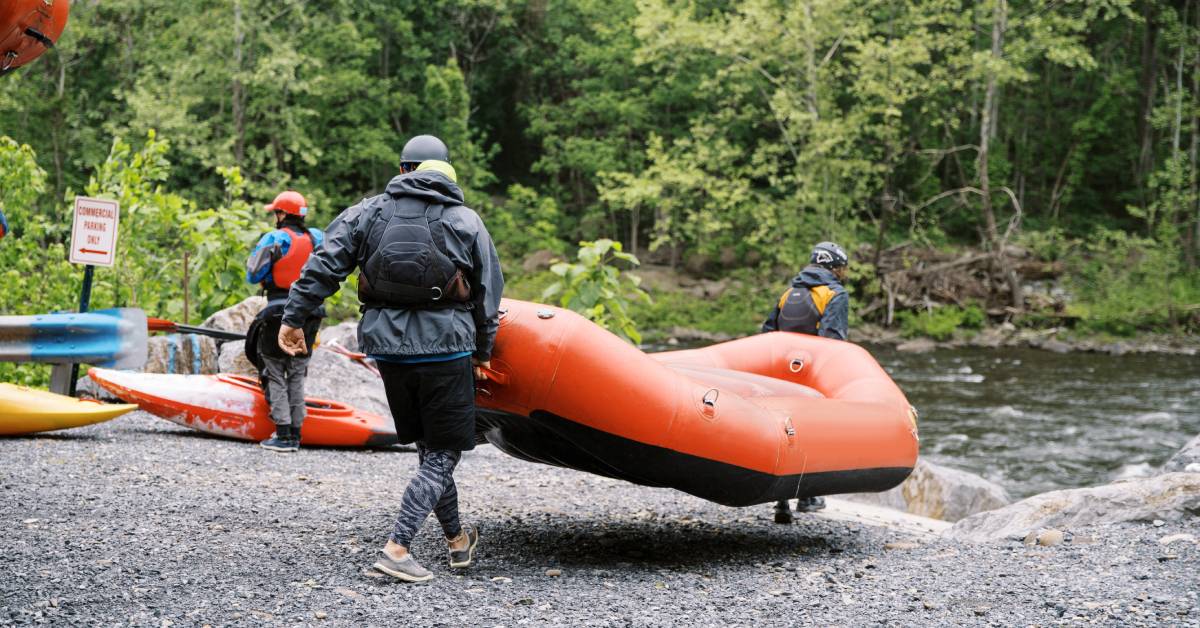
At Trailer Made Trailers, this is the kind of stuff they’ve been dealing with for years. Real hauling setups. Real engineered frames. Real towing dynamics. Not fantasy Pinterest trailer builds that look good until they hit washboard roads in Idaho or steep river launches in Colorado.

Why a Dedicated Raft Trailer Actually Matters
People ask this all the time:
“Can’t I just use a regular boat trailer or utility trailer?”
Technically? Sure.
Should you? Usually no.
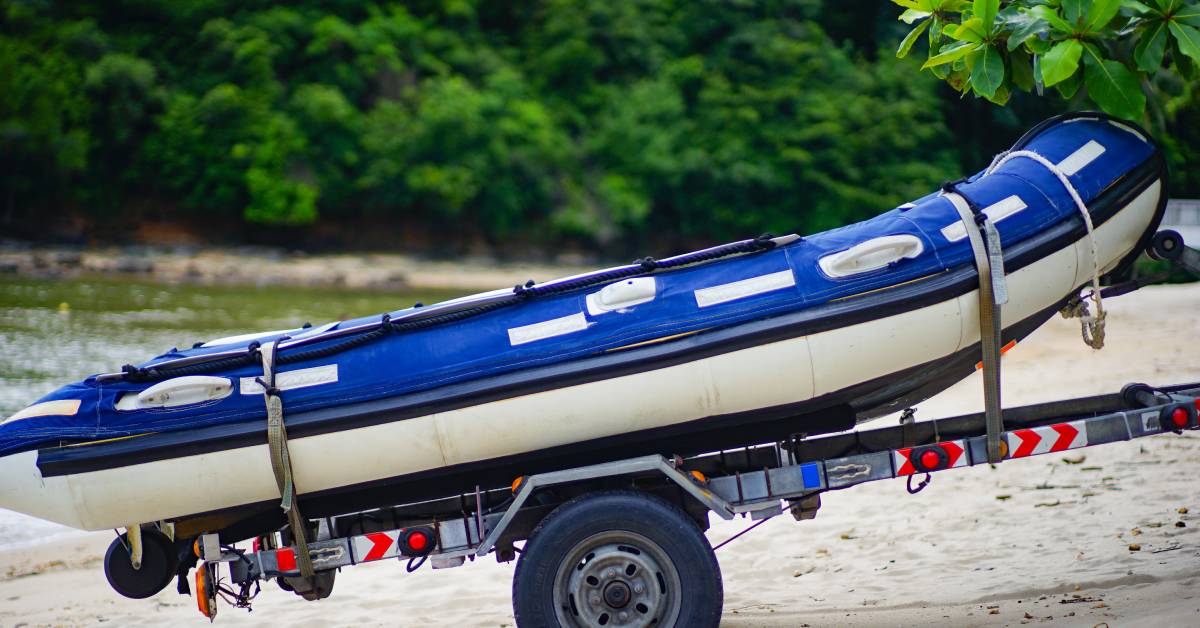
Inflatable raft transport has its own weird challenges. Rafts distribute weight differently than hard-bottom boats. They flex. They bounce. They shift under wind loads. Wet gear changes weight distribution constantly. Add coolers, dry boxes, frames, oars, fuel, recovery gear, maybe even camping equipment, and suddenly your setup weighs a lot more than expected.
Now combine that with:
- rough launch roads
- uneven gravel terrain
- steep river access points
- long-distance towing
- Repeated water exposure
That’s where generic trailers start showing their weaknesses. A proper raft trailer hauling system is engineered around those realities instead of pretending they don’t exist. The engineering matters way more than most buyers realize.
Why Engineered Axle Placement Matters More Than Most Buyers Think
This part gets overlooked constantly. Probably because most trailer companies don’t explain it well.
Axle placement directly affects:
- towing stability
- sway control
- tongue weight
- braking performance
- tire wear
- overall handling
If the axle setup is wrong, the whole trailer feels sketchy behind the tow vehicle. Especially with inflatable raft transport, where loads shift more dynamically than rigid boats. You feel it at highway speeds first.
- Trailer sway.
- Bouncing.
- Weird steering feedback.
- Uneven tracking.
- That’s not just annoying. It gets dangerous.
A properly engineered raft trailer for sale should be designed around actual load balancing, not generic “one-size-fits-all” axle positioning. And this is where experienced manufacturers separate themselves from generic weld shops. Anybody can weld metal together. Not everybody understands towing dynamics.
Raft Trailer Rollers Are More Important Than People Think
People underestimate raft trailer rollers until they use bad ones. Then suddenly they understand real quick. A quality raft trailer roller system helps protect the raft during loading and unloading while reducing unnecessary abrasion and stress on the inflatable material.
Cheap rollers usually fail in a few predictable ways:
- poor alignment
- weak mounting brackets
- seized bearings
- uneven pressure points
- cracking from UV exposure
- wobbling under heavier loads
And once the rollers stop functioning correctly, loading becomes a nightmare. Good raft trailer rollers should roll smoothly, support the raft evenly, and hold up under repeated exposure to water, mud, UV, and rough terrain. This sounds basic. But honestly, lots of trailers still get this wrong.
Aluminum Raft Trailer vs Steel: Which Is Better?
This debate never dies. And the truth is, both can work when engineered properly. But there are tradeoffs.
An aluminum raft trailer is lighter, naturally corrosion-resistant, and easier on fuel economy during long-distance towing. That matters for people constantly moving between river systems or hauling through wet environments.
But lightweight doesn’t automatically mean better. Poorly engineered aluminum trailers can flex too much under load if the design isn’t right.
Steel trailers, meanwhile, often provide excellent structural rigidity and durability for heavier hauling applications. Especially when dealing with larger raft setups or commercial rafting operations.
- The important part isn’t just material choice.
- It’s engineering quality.
- That’s the real conversation.
- Because a badly built aluminum trailer is still a bad trailer.
And a properly engineered steel trailer will outlast most bargain-bin competitors by years.
The Trailer Hitch Setup Can Make or Break the Entire Experience
People love blaming trailers for towing problems when half the time the trailer hitch setup is wrong. Improper hitch height alone can completely mess up towing stability.
- Too nose-high? Now the weight distribution changes.
- Too nose-low? Handling suffers again.
And then people wonder why the trailer feels unstable. A proper trailer hitch setup should keep the trailer level while maintaining correct tongue weight percentages for safe towing. This becomes even more important with raft hauling systems because gear loads change constantly depending on the trip.
One weekend, you’re carrying basic rafting gear. Next trip, you’ve added coolers, camp equipment, recovery gear, extra fuel, and suddenly the load balance shifts significantly. Experienced trailer builders understand these real-world variables. That’s why engineered trailer systems matter.
Water Exposure Destroys Cheap Trailers Fast
This part gets ignored constantly. Raft trailers live around water. But repeated water exposure absolutely destroys poorly built trailers over time.
- Bearings fail.
- Rust spreads.
- Electrical systems corrode.
- Cheap hardware deteriorates.
- Rollers seize.
Brake components wear prematurely. Especially in regions where people deal with snow, road salt, mud, or repeated river launches. A quality boat trailer or inflatable raft trailer should be designed specifically with corrosion resistance and long-term durability in mind.
That includes:
- sealed wiring
- quality hardware
- proper coatings
- durable bearings
- reinforced mounting points
- engineered drainage considerations
The cheap trailers usually look fine in year one. Year three tells the real story.
Loading Simplicity Actually Matters
Nobody talks about this enough. If loading your raft becomes frustrating every trip, eventually you start hating the entire process. And honestly, complicated loading systems are usually a sign of poor trailer design. Good raft hauling systems should make loading smoother, faster, and more predictable.
Especially for:
- solo operators
- commercial rafting crews
- long-distance travelers
- repeat river users
The better the trailer design, the less physical abuse your raft takes during loading and unloading. That extends the life of the raft itself, too. Which matters because inflatable rafts aren’t cheap anymore.
Suspension and Tire Quality Matter More Than Fancy Accessories
Some trailer companies focus heavily on cosmetic upgrades. Meanwhile, the suspension underneath is garbage. That’s backwards.
Suspension quality directly affects:
- towing stability
- raft protection
- trailer lifespan
- bearing wear
- frame stress
- road handling
Especially on rough roads leading to river access points. A rough suspension setup transfers shock directly into the raft, the frame, and the gear being hauled. That constant punishment adds up over time.
Cheap trailer tires are one of the fastest ways to ruin a trip. Blowouts on remote roads aren’t just annoying. They become safety problems really fast. A serious raft trailer for sale should prioritize structural quality before cosmetic extras.
Why Cheap Trailer Builds Usually Cost More Long-Term
This is probably the biggest misconception buyers still have. People think they’re saving money upfront. Sometimes they are. For about six months.
Then repairs start stacking up:
- axle replacements
- tire wear
- lighting failures
- roller repairs
- cracked welds
- rust problems
- bearing failures
- frame fatigue
Now suddenly, the “cheap” trailer isn’t cheap anymore. And this happens constantly in the trailer world.
Trailer Made leans hard into engineering, structural quality, and long-term durability because they’ve watched customers come back after learning this lesson the expensive way. There’s a reason experienced builders obsess over frame design, axle geometry, and load distribution. Because those things matter after 50,000 miles. Not just in the sales photos.
Real-World River Transport Is Harder Than Most Buyers Expect
The internet makes raft hauling look simple. It usually isn’t. Real-world inflatable raft transport involves:
- steep launches
- muddy access roads
- highway crosswinds
- overloaded gear weekends
- rough terrain
- weather exposure
- long-distance travel
- constant loading cycles
That’s why engineered trailers matter so much more than people realize at first. A properly designed raft trailer isn’t just about moving the raft. It’s about protecting your investment, reducing stress, improving towing safety, and making the entire rafting experience smoother long-term.
That’s where quality starts separating itself. And honestly, once people experience a properly engineered trailer setup, they usually never go back to cheap, generic trailers again. Because the difference becomes obvious fast.
Trailer Made Understands the Structural Side Most Companies Ignore
This is where Trailer Made stands apart from a lot of generic trailer manufacturers. They don’t treat the trailer like an accessory. They treat it like the structural platform on which everything depends. That mindset changes the entire build process.
- Engineered systems.
- Real-world towing knowledge.
- Long-term durability focus.
- Structural integrity.
- Load balancing.
- Quality fabrication.
That’s the kind of experience buyers should be looking for now. Especially if they’re investing serious money into rafting equipment, commercial river operations, or long-distance hauling setups. There’s too much money riding on these systems to gamble on poorly built trailers anymore.
Final Thoughts
The best raft trailer setups aren’t always the flashiest.
Usually, they’re the ones quietly doing their job year after year without problems.
That comes from engineering.
- From quality materials.
- From proper axle placement.
- From durable raft trailer rollers.
- From understanding towing dynamics and real-world hauling conditions.
Not shortcuts, and honestly, this industry has enough cheaply built trailers already.
If you’re serious about inflatable raft transport, river rafting gear transport, or building a reliable raft hauling system that actually lasts, invest in the foundation first. Because the trailer is the foundation. Everything else depends on it.
Visit Trailer Made Trailers to start your build and learn what engineered trailer systems are supposed to look like in the real world.
FAQs
What is a raft trailer used for?
A raft trailer is used to transport inflatable rafts, rafting equipment and river equipment over long distances and rough roads. A dedicated inflatable raft trailer typically features engineered support systems, raft trailer rollers, improved load distribution and towing stability features when compared with a standard utility trailer. The aim is to preserve the raft, and over time, to make loading and unloading, and towing much easier.
What are some of the characteristics of a good raft trailer?
The areas of greatest concern are frame construction, axle placement, suspension, and long-lasting, rugged raft trailer rollers. A quality raft trailer for sale will also be made from corrosion-free materials, have sturdy crossmembers, a good lighting system on the trailer and a properly balanced hitch setup. The truth is that flashy accessories aren’t as important as structural integrity and towing stability in real life.
Can you use a regular utility trailer for a raft?
You can, but it usually becomes frustrating long-term. Most utility trailers aren’t engineered specifically for inflatable raft transport, which means poor weight distribution, rough loading angles, and higher wear on the raft itself. People often end up modifying them heavily anyway, so starting with a purpose-built raft hauling system usually makes more sense financially over time.
How do you secure a raft on a trailer?
Most raft setups use heavy-duty straps combined with properly positioned support points and raft trailer rollers to distribute pressure evenly across the inflatable structure. The key is avoiding over-tightening or creating sharp pressure points that can damage the raft material during transport. A properly engineered boat trailer setup also helps reduce shifting, bouncing, and instability while towing at highway speeds.
How much weight can a raft trailer carry?
That depends entirely on the trailer’s engineering, axle rating, frame construction, and suspension system. Some smaller aluminum raft trailer models handle lightweight recreational rafts, while heavier commercial rafting trailers are built for much larger gear loads and extended transport use. The important thing is matching the trailer capacity to the fully loaded weight, not just the empty raft weight that people usually calculate.