
The idea sounds simple enough.
Buy a trailer. Grab a build your own tiny house kit. Watch a few hundred YouTube videos. Spend some weekends working in the driveway. A few months later, you’ve got your dream tiny home.
That’s the version people see online.
The reality is usually a little different.
We’ve talked to thousands of builders over the years. Some are contractors. Some are first-time DIYers. Some are incredibly skilled with tools. And almost all of them hit unexpected roadblocks somewhere along the way.
The truth is that building a small home yourself can absolutely be done. Plenty of people succeed. But the challenges are real, and most of them show up long before the walls go up.
Let’s talk about what actually causes problems in the real world and how to avoid turning your dream project into an expensive lesson.
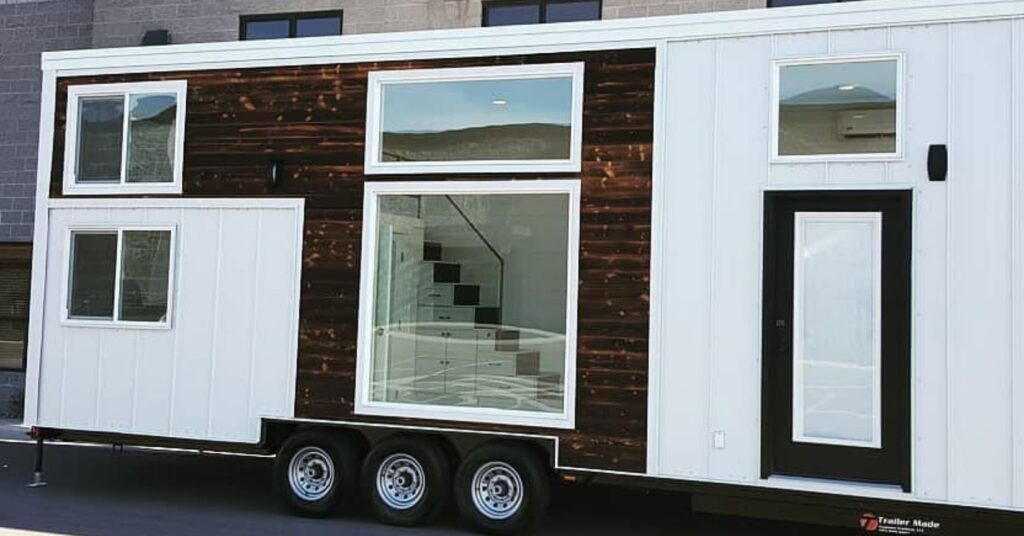
The Trailer Decision Can Make or Break the Entire Project
Let’s start with the biggest mistake.
People spend months researching cabinets, flooring, insulation, and finishes. Then they spend about twenty minutes deciding what trailer to build on.
That’s backwards.
The trailer is the foundation of the entire structure.
Every pound of weight. Every wall. Every window. Every roof truss. Everything depends on that frame performing properly for decades.
We’ve seen plenty of DIY builders buy generic utility trailers because they looked similar online. A year later, they’re dealing with frame flex, axle problems, uneven weight distribution, or structural issues that are nearly impossible to fix without tearing into the house itself.
This is why working with experienced tiny house trailer manufacturers matters.
A properly engineered trailer isn’t just steel welded together. It involves load calculations, axle placement, weight distribution, frame design, crossmember spacing, braking systems, and long-term durability.
Cut corners here, and you’ll pay for it later.
Every single time.
Understanding Tiny House Regulations Is More Complicated Than Most People Expect
One of the biggest surprises for first-time builders is realizing that building the house is often kind of easier than trying to wade through all the rules. It sounds weird at first, but once you start, the process can feel less stubborn than the paperwork and regulations you have to follow, you know…
Tiny house regulations vary dramatically depending on where you live.
One county may welcome tiny homes.
The county next door may have restrictions that make placement difficult.
Some jurisdictions recognize tiny homes under residential codes. Others treat them like RVs. Some have specific ADU requirements. Others don’t.
That’s why one of the first questions you should answer isn’t what floor plan you want.
It’s whether your project can legally go where you plan to put it.
Many people spend thousands building first and researching regulations later.
That’s a painful mistake.
Before ordering materials, check local zoning requirements, utility connections, setback rules, occupancy requirements, and permit processes.
A beautiful tiny house doesn’t help much if you can’t legally place it where you want.
Small Home Construction Challenges Start With Weight Management
This is where things get technical, and honestly, it’s where many projects get into trouble. Every appliance, fixture, cabinet, countertop, and piece of furniture adds weight.
A tiny house may look small, but it can become surprisingly heavy very quickly. One common issue in small home construction challenges is exceeding trailer capacity without realizing it.
- People add granite countertops.
- Heavy tile.
- Oversized furniture.
- Additional storage.
Before long, they’ve added thousands of pounds beyond their original estimates.
Weight affects:
- Safety
- Towing performance
- Brake effectiveness
- Tire wear
- Structural integrity
- Long-term trailer durability
This is one reason experienced builders spend so much time calculating loads before construction begins.
The trailer isn’t just supporting today’s house. It’s supporting that house ten or twenty years from now.
Tiny Home Building Problems Often Come From Inexperience With Systems
Most people have some construction skills.
Far fewer understand how all building systems interact. The challenge isn’t learning each system individually. The challenge is understanding how they all work together.
We’ve seen beautiful DIY projects develop mold problems because ventilation wasn’t considered. We’ve seen plumbing systems freeze because insulation details were overlooked, and structural movement caused by improper fastening techniques.
None of these mistakes happens because builders are careless. Usually, they’re simply learning while building, and learning on a house is expensive.
The Hidden Cost of DIY Home Construction Mistakes
Here’s something people rarely discuss.
Mistakes don’t usually cost what the original mistake costs. They cost what the repair costs.
There’s a difference.
A misplaced electrical run might cost twenty dollars in wire. Fixing the wall you already finished around it may cost hundreds. An improperly installed window may seem minor. Water damage two years later is not minor.
Many DIY home construction mistakes create secondary problems that become significantly more expensive than the original error.
That’s why experienced builders often move more slowly during critical stages.
They know fixing mistakes later is usually harder than doing things correctly up front.
Self-Build Home Challenges Become Bigger When Budgets Get Tight
Most DIY builders are working with budget constraints.
That’s understandable.
The danger comes when cost savings drive major structural decisions. This is especially common with trailers.
Someone sees a cheaper option online and thinks they’re saving money. Sometimes they are.
Temporarily.
A properly engineered trailer may cost more upfront, but it can save thousands over the life of the home. Poor engineering creates problems that compound over time.
- Frame flex.
- Door alignment issues.
- Wall movement.
- Stress cracks.
- Towing instability.
We’ve seen them. The cheapest trailer is rarely the cheapest solution.
Why Trailer Quality Matters More Than Ever
The tiny home industry has matured.
Buyers are more informed.
Inspectors are more informed.
Municipalities are more informed.
The days of building on whatever trailer happened to be available are fading quickly.
That’s a good thing.
Companies like Trailer Made helped push the industry toward higher engineering standards because long-term durability matters.
A trailer should not be treated like a disposable component.
It’s the structural platform beneath the entire investment.
And when you’re investing tens of thousands of dollars—or more—into a home, the foundation deserves serious attention.
Especially if you’re purchasing tiny home frame kits or planning a fully custom build.
Choosing the Right Manufacturing Partner Matters
Not all trailer companies operate at the same level.
That’s just reality.
Some manufacturers build utility trailers.
Some build equipment trailers.
Some build tiny house trailers as a side product.
Then there are companies that have spent years refining engineering specifically for tiny homes.
That distinction matters.
Among trailer manufacturers in Colorado, Trailer Made has earned a reputation for engineering-first construction, industry education, and helping move the tiny house sector forward.
Thousands of builds across the country have provided real-world feedback that shapes every generation of trailers.
That’s experience you can’t fake.
And frankly, experience becomes very valuable when your home is riding down the highway at 65 miles per hour.
Can You Build Your Own Tiny House Successfully?
Absolutely.
People do it every year.
The short answer is that success comes down to preparation, patience, and making smart decisions early.
- Understand the regulations.
- Choose quality components.
- Invest in engineering.
- Plan for weight.
- Create realistic timelines.
- And don’t assume every shortcut saves money.
Most don’t. The builders who succeed aren’t necessarily the most skilled.
They’re usually the ones who respect the complexity of the project and build on a solid foundation from day one.
Final Thoughts
Constructing a small home yourself can be one of the most rewarding projects you’ll ever take on.
It can also expose every weak assumption, rushed decision, and budget shortcut along the way.
The biggest owner-built home obstacles usually aren’t dramatic failures. They’re dozens of small decisions that slowly create larger problems over time.
That’s why the trailer matters so much.
It’s why engineering matters.
And it’s why experienced manufacturers continue to play such a critical role in successful tiny home construction.
Whether you’re buying a build-your-own tiny house kit, comparing tiny home frame kits, researching legal tiny house requirements, or planning your first DIY build, start with the foundation and work outward.
Everything else depends on it.
Ready to build on a trailer designed specifically for tiny homes?
Visit Trailer Made Trailers today and learn why builders across North America trust engineered foundations built for long-term performance, safety, and value.
FAQs
What are the biggest challenges of constructing a small home yourself?
The biggest challenges usually kinda involve planning, engineering, budgeting, and understanding the local tiny house regs, like for real. Most people assume the build part is the hard one, but honestly, problems around trailer selection, weight calculations, permits, and system integration tend to get bigger. A lot of times, the whole thing works out or doesn’t long before the first wall even gets framed.
What mistakes should you avoid when building a small home on your own?
A pretty common mistake, well one of the most common, is picking a trailer based mostly on the price, like it’s the whole story. Other bigger issues show up too, underestimating the weight, ignoring local codes and zoning rules, rushing through the design phase without really checking details, plus not properly planning moisture control and ventilation. A lot of those costly fixes begin as small things that looked harmless at the time, during construction, when everyone is tired and moving on.
How much does it actually cost to build a small home yourself?
The costs can swing quite a bit depending on the size, the materials, the finishes, and also on whether you start with one of those little home frame kits that are already floating around. Some DIY builders end up wrapping up the whole thing with a pretty modest budget, while other folks end up putting more money into premium surface treatments and better long-term durability. In actual practice, the biggest factor is usually how many of the tasks you can realistically tackle by yourself versus hiring a pro for whatever’s left, because that choice kind of rewrites the entire equation.
What skills are needed to successfully build a small house?
Successful builders usually need some mix of framing, basic electrical, plumbing, roofing stuff, plus project leadership, not just one skill. And honestly, more than anything, they need patience, plus a real problem-solving mindset. Building a small home, like a kind of compact place, often turns into learning new trades on the fly while juggling calendars, money limits, inspections, and even material drop-offs, all at once, kinda constantly.
How do you work through the usual DIY small home construction headaches?
First, do detailed planning, and keep expectations realistic. Try to partner with experienced tiny house trailer manufacturers, put money into solid engineering, then confirm local regulations early on, before you get too far. Also, don’t decide everything only on the up-front price, because that can be a trap. The builders who actually finish strong are typically the ones who spend extra time thinking things through before construction even starts.