
Trailer Made Custom Trailers

Trailer Made Custom Trailer Logo

What Are the Biggest Challenges of Constructing a Small Home Yourself?

tiny homes

The idea sounds simple enough.

Buy a trailer. Grab a build your own tiny house kit. Watch a few hundred YouTube videos. Spend some weekends working in the driveway. A few months later, you’ve got your dream tiny home.

That’s the version people see online.

The reality is usually a little different.

We’ve talked to thousands of builders over the years. Some are contractors. Some are first-time DIYers. Some are incredibly skilled with tools. And almost all of them hit unexpected roadblocks somewhere along the way.

The truth is that building a small home yourself can absolutely be done. Plenty of people succeed. But the challenges are real, and most of them show up long before the walls go up.

Let’s talk about what actually causes problems in the real world and how to avoid turning your dream project into an expensive lesson.
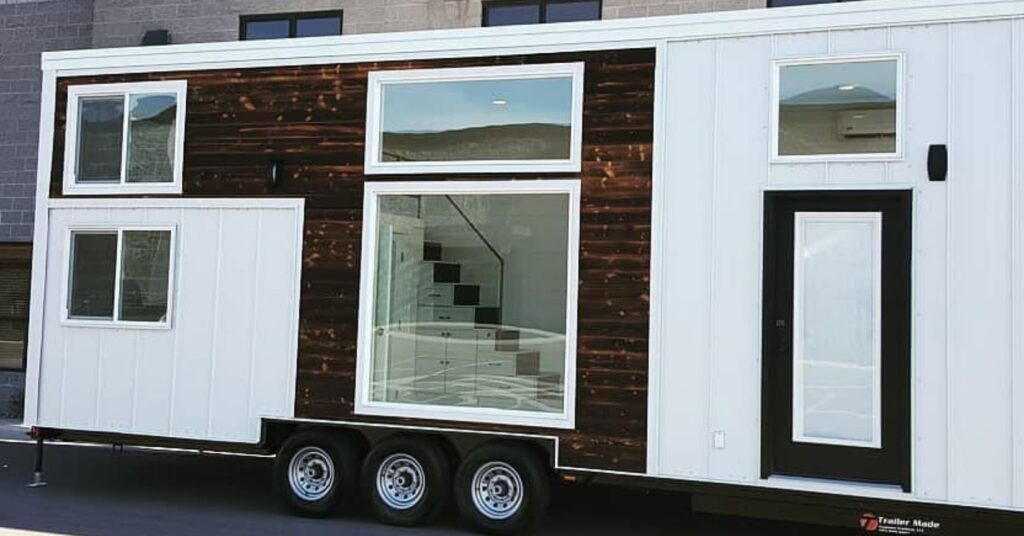
The History of Tiny House Living: An Origin Story

The Trailer Decision Can Make or Break the Entire Project

Let’s start with the biggest mistake.

People spend months researching cabinets, flooring, insulation, and finishes. Then they spend about twenty minutes deciding what trailer to build on.

That’s backwards.

The trailer is the foundation of the entire structure.

Every pound of weight. Every wall. Every window. Every roof truss. Everything depends on that frame performing properly for decades.

We’ve seen plenty of DIY builders buy generic utility trailers because they looked similar online. A year later, they’re dealing with frame flex, axle problems, uneven weight distribution, or structural issues that are nearly impossible to fix without tearing into the house itself.

This is why working with experienced tiny house trailer manufacturers matters.

A properly engineered trailer isn’t just steel welded together. It involves load calculations, axle placement, weight distribution, frame design, crossmember spacing, braking systems, and long-term durability.

Cut corners here, and you’ll pay for it later.

Every single time.

Understanding Tiny House Regulations Is More Complicated Than Most People Expect

One of the biggest surprises for first-time builders is realizing that building the house is often kind of easier than trying to wade through all the rules. It sounds weird at first, but once you start, the process can feel less stubborn than the paperwork and regulations you have to follow, you know…

Tiny house regulations vary dramatically depending on where you live.

One county may welcome tiny homes.

The county next door may have restrictions that make placement difficult.

Some jurisdictions recognize tiny homes under residential codes. Others treat them like RVs. Some have specific ADU requirements. Others don’t.

That’s why one of the first questions you should answer isn’t what floor plan you want.

It’s whether your project can legally go where you plan to put it.

Many people spend thousands building first and researching regulations later.

That’s a painful mistake.

Before ordering materials, check local zoning requirements, utility connections, setback rules, occupancy requirements, and permit processes.

A beautiful tiny house doesn’t help much if you can’t legally place it where you want.

Small Home Construction Challenges Start With Weight Management

This is where things get technical, and honestly, it’s where many projects get into trouble. Every appliance, fixture, cabinet, countertop, and piece of furniture adds weight. 

A tiny house may look small, but it can become surprisingly heavy very quickly. One common issue in small home construction challenges is exceeding trailer capacity without realizing it.

  • People add granite countertops.
  • Heavy tile.
  • Oversized furniture.
  • Additional storage.

Before long, they’ve added thousands of pounds beyond their original estimates.

Weight affects:

  • Safety
  • Towing performance
  • Brake effectiveness
  • Tire wear
  • Structural integrity
  • Long-term trailer durability

This is one reason experienced builders spend so much time calculating loads before construction begins.

The trailer isn’t just supporting today’s house. It’s supporting that house ten or twenty years from now.

Tiny Home Building Problems Often Come From Inexperience With Systems

Most people have some construction skills.

Far fewer understand how all building systems interact. The challenge isn’t learning each system individually. The challenge is understanding how they all work together.

We’ve seen beautiful DIY projects develop mold problems because ventilation wasn’t considered. We’ve seen plumbing systems freeze because insulation details were overlooked, and structural movement caused by improper fastening techniques.

None of these mistakes happens because builders are careless. Usually, they’re simply learning while building, and learning on a house is expensive.

The Hidden Cost of DIY Home Construction Mistakes

Here’s something people rarely discuss.

Mistakes don’t usually cost what the original mistake costs. They cost what the repair costs.

There’s a difference.

A misplaced electrical run might cost twenty dollars in wire. Fixing the wall you already finished around it may cost hundreds. An improperly installed window may seem minor. Water damage two years later is not minor.

Many DIY home construction mistakes create secondary problems that become significantly more expensive than the original error.

That’s why experienced builders often move more slowly during critical stages.

They know fixing mistakes later is usually harder than doing things correctly up front.

Self-Build Home Challenges Become Bigger When Budgets Get Tight

Most DIY builders are working with budget constraints.

That’s understandable.

The danger comes when cost savings drive major structural decisions. This is especially common with trailers.

Someone sees a cheaper option online and thinks they’re saving money. Sometimes they are.

Temporarily.

A properly engineered trailer may cost more upfront, but it can save thousands over the life of the home. Poor engineering creates problems that compound over time.

  • Frame flex.
  • Door alignment issues.
  • Wall movement.
  • Stress cracks.
  • Towing instability.

We’ve seen them. The cheapest trailer is rarely the cheapest solution.

Why Trailer Quality Matters More Than Ever

The tiny home industry has matured.

Buyers are more informed.

Inspectors are more informed.

Municipalities are more informed.

The days of building on whatever trailer happened to be available are fading quickly.

That’s a good thing.

Companies like Trailer Made helped push the industry toward higher engineering standards because long-term durability matters.

A trailer should not be treated like a disposable component.

It’s the structural platform beneath the entire investment.

And when you’re investing tens of thousands of dollars—or more—into a home, the foundation deserves serious attention.

Especially if you’re purchasing tiny home frame kits or planning a fully custom build.

Choosing the Right Manufacturing Partner Matters

Not all trailer companies operate at the same level.

That’s just reality.

Some manufacturers build utility trailers.

Some build equipment trailers.

Some build tiny house trailers as a side product.

Then there are companies that have spent years refining engineering specifically for tiny homes.

That distinction matters.

Among trailer manufacturers in Colorado, Trailer Made has earned a reputation for engineering-first construction, industry education, and helping move the tiny house sector forward.

Thousands of builds across the country have provided real-world feedback that shapes every generation of trailers.

That’s experience you can’t fake.

And frankly, experience becomes very valuable when your home is riding down the highway at 65 miles per hour.

Can You Build Your Own Tiny House Successfully?

Absolutely.

People do it every year.

The short answer is that success comes down to preparation, patience, and making smart decisions early.

  • Understand the regulations.
  • Choose quality components.
  • Invest in engineering.
  • Plan for weight.
  • Create realistic timelines.
  • And don’t assume every shortcut saves money.

Most don’t. The builders who succeed aren’t necessarily the most skilled.

They’re usually the ones who respect the complexity of the project and build on a solid foundation from day one.

Final Thoughts

Constructing a small home yourself can be one of the most rewarding projects you’ll ever take on.

It can also expose every weak assumption, rushed decision, and budget shortcut along the way.

The biggest owner-built home obstacles usually aren’t dramatic failures. They’re dozens of small decisions that slowly create larger problems over time.

That’s why the trailer matters so much.

It’s why engineering matters.

And it’s why experienced manufacturers continue to play such a critical role in successful tiny home construction.

Whether you’re buying a build-your-own tiny house kit, comparing tiny home frame kits, researching legal tiny house requirements, or planning your first DIY build, start with the foundation and work outward.

Everything else depends on it.

Ready to build on a trailer designed specifically for tiny homes?

Visit Trailer Made Trailers today and learn why builders across North America trust engineered foundations built for long-term performance, safety, and value.

FAQs

What are the biggest challenges of constructing a small home yourself?

The biggest challenges usually kinda involve planning, engineering, budgeting, and understanding the local tiny house regs, like for real. Most people assume the build part is the hard one, but honestly, problems around trailer selection, weight calculations, permits, and system integration tend to get bigger. A lot of times, the whole thing works out or doesn’t long before the first wall even gets framed.

What mistakes should you avoid when building a small home on your own?

A pretty common mistake, well one of the most common, is picking a trailer based mostly on the price, like it’s the whole story. Other bigger issues show up too, underestimating the weight, ignoring local codes and zoning rules, rushing through the design phase without really checking details, plus not properly planning moisture control and ventilation. A lot of those costly fixes begin as small things that looked harmless at the time, during construction, when everyone is tired and moving on.

How much does it actually cost to build a small home yourself?

The costs can swing quite a bit depending on the size, the materials, the finishes, and also on whether you start with one of those little home frame kits that are already floating around. Some DIY builders end up wrapping up the whole thing with a pretty modest budget, while other folks end up putting more money into premium surface treatments and better long-term durability. In actual practice, the biggest factor is usually how many of the tasks you can realistically tackle by yourself versus hiring a pro for whatever’s left, because that choice kind of rewrites the entire equation.

What skills are needed to successfully build a small house?

Successful builders usually need some mix of framing, basic electrical, plumbing, roofing stuff, plus project leadership, not just one skill. And honestly, more than anything, they need patience, plus a real problem-solving mindset. Building a small home, like a kind of compact place, often turns into learning new trades on the fly while juggling calendars, money limits, inspections, and even material drop-offs, all at once, kinda constantly.

How do you work through the usual DIY small home construction headaches?

First, do detailed planning, and keep expectations realistic. Try to partner with experienced tiny house trailer manufacturers, put money into solid engineering, then confirm local regulations early on, before you get too far. Also, don’t decide everything only on the up-front price, because that can be a trap. The builders who actually finish strong are typically the ones who spend extra time thinking things through before construction even starts.

What Makes Experienced Tiny House Trailer Manufacturers Stand Out in the Market?

build your own tiny house kit

Let’s be real. Anyone can weld a frame together and call it a tiny house trailer. That doesn’t mean it’s safe. Or smart. Or built to last past a couple of road trips and one rough winter.

If you’re shopping for a tiny house for sale, or looking to build one from scratch, the trailer underneath it matters more than most people realize. It’s not the “fun” part of the build, sure. But it’s the part that decides whether your tiny house holds up… or quietly starts falling apart.

And that’s exactly where experienced tiny house trailer manufacturers separate themselves from the rest of the pack.

This isn’t about shiny marketing or big promises. It’s about engineering, load ratings, weld quality, real materials, and builders who’ve already made the mistakes so you don’t have to.

Let’s break down what actually makes a manufacturer worth trusting.

Why the Trailer Is the Backbone of Any Tiny House

People fall in love with the windows. The layout. The porch. The loft ladder. Nobody gets excited about steel thickness.

But the truth is simple. Your trailer is the foundation. And if the foundation is wrong, everything above it is fighting a losing battle.

A weak trailer causes:

  • Frame flex that cracks drywall
  • Doors that stop closing right
  • Windows that leak
  • Rooflines that shift
  • Axles that fail early
  • Tires that wear unevenly

And the scary part? Most of that damage doesn’t show up right away. It sneaks in slowly. By the time you see it, repairs cost real money.

Experienced tiny house trailer manufacturers design around load distribution, tongue weight, torsional stress, and braking capacity. New or cheap builders often… guess.

That difference shows up after mile 300, not mile three.

What Experience Actually Means in This Industry

“Experience” gets thrown around a lot. But in the trailer world, it has a very specific meaning.

It means they’ve:

  • Built hundreds (or thousands) of frames
  • Seen real trailer failures
  • Had customers come back with feedback
  • Adjusted designs based on real-world stress
  • Refined weld patterns over time
  • Upgraded materials when older ones didn’t perform

That kind of experience doesn’t come from YouTube tutorials. It comes from years on the shop floor.

This is exactly why companies like Trailer Made Custom Trailers stand out. They’re not guessing what works. They’re building from hard-earned data.

Engineered Trailers vs “Shop-Built Frames” (Huge Difference)

Here’s a hard truth that makes some builders uncomfortable.

Not all trailers are engineered. Many are just shop-built frames with a VIN welded on.

An engineered trailer is drawn, analyzed, and tested before it’s ever built. The load ratings are verified. The axle placement is calculated. The steel thickness is selected based on real forces, not opinion.

Shop-built frames? They’re built on “what worked last time.” That’s not engineering. That’s hope.

When you’re talking about a 14,000–20,000 lb rolling house, hope is not a strategy.

Experienced tiny house trailer manufacturers work with engineers. Period. That’s how braking, axle spread, weight distribution, and frame strength all get dialed in correctly.

Cut corners here, and the only thing you’re cutting is the life of your home.

Load Ratings Aren’t Just Numbers on Paper

A trailer rated for 14K doesn’t magically become safe at 13,900 lbs. Real-world loads shift. Water tanks slosh. Appliances vibrate. People move.

Good manufacturers build in a safety buffer. Cheap ones build right to the edge.

If you’re buying a tiny house for sale, always ask:

  • What’s the total weight of the house?
  • What’s the net load rating of the trailer?
  • Is that rating verified by engineered axles and frame specs?

If the seller can’t answer cleanly, that’s your red flag.

Why Axle Placement Is a Bigger Deal Than Most People Think

This one’s sneaky.

Axles that are even slightly off create:

  • Dangerous tongue weight
  • Poor towing behavior
  • Increased sway at highway speeds
  • Premature tire wear
  • Frame stress at the wrong points

Experienced manufacturers don’t eyeball axle placement. They calculate it based on projected live load, water placement, loft weight, appliance locations, and hitch configuration.

That math matters. A lot.

Weld Quality Is Everything (But Almost Nobody Talks About It)

Bad welds don’t usually fail instantly. They fatigue. Slowly. Over time.

Micro-cracks form. Stress concentrates. And one day, a joint fails that was never supposed to.

The best tiny house trailer manufacturers use certified welders, full penetration welds, and consistent inspection protocols. That’s not cheap. And it shouldn’t be.

Because rewelding a loaded frame after the house is finished is a nightmare, trust me.

Why Cutting Corners on Trailers Is Always a Bad Deal

Let’s be blunt.

Saving $1,500 on your trailer can cost you $15,000 later.

Cheap trailers usually cut costs by:

  • Using thinner steel
  • Skipping reinforcement
  • Using lower-grade axles
  • Rushing welding
  • Avoiding engineered designs
  • Applying cheap coatings that rust fast

Those savings vanish the moment something shifts, cracks, or breaks.

A trailer should last longer than the house built on it. That’s the goal. Anything less is settling.

Tiny House Trailers vs Utility Trailers (Not the Same Animal)

This mistake still happens way too often.

Someone buys a beefed-up utility trailer thinking it’ll handle a tiny house. Sometimes it works. Often it doesn’t.

Utility trailers are designed for:

  • Temporary loads
  • Even weight distribution
  • Short travel distances
  • Open-air decks

Tiny houses are:

  • Permanent loads
  • Asymmetrical
  • Tall and wind-sensitive
  • Moved infrequently but under huge stress

Different job. Different build.

Real tiny house trailer manufacturers design specifically for living structures. Not landscaping equipment.

How Trailer Made Custom Trailers Approaches This Differently

This is where Trailer Made Custom Trailers earns its reputation.

They specialize in:

  • Engineered tiny house trailers
  • ADU trailers
  • Park model foundations
  • Custom heavy-duty builds

Every design considers:

  • Actual load requirements
  • Road stress
  • Long-term flex
  • Proper braking
  • Towing stability
  • Steel longevity

They’re not building “close enough.” They’re building it right the first time. That’s the difference.

ADUs, Tiny Homes, and the Crossover Market

More buyers today are searching for:

  • An ADU for sale
  • Mobile backyard dwellings
  • Rental tiny homes
  • Guest houses on wheels

That crossover market creates new demands on trailers.

An ADU trailer often:

  • Moves once or twice, then sits for years
  • Carries higher interior loads
  • Needs long-term leveling stability
  • Must handle utility hookups better

Not every trailer is built for that kind of lifecycle. Experienced manufacturers design for both mobility and long-term static load.

That balance matters more than people think.

Custom vs Mass-Produced Trailers

Mass production keeps prices down. No doubt. But it also forces one-size-fits-all specs.

Custom manufacturing allows:

  • Adjusted axle spreads
  • Reinforced loft zones
  • Custom frame widths
  • Tank-support integration
  • Specialized hitch setups

If you’re building a unique layout or something oversized, custom matters. A lot.

That’s exactly where Trailer Made’s custom approach shines.

What Buyers Should Ask Before Choosing a Trailer Manufacturer

If you’re serious about buying a tiny house for sale, or working with a builder, ask these uncomfortable questions:

  • Is this trailer engineered?
  • What steel thickness is used?
  • What axles are installed and what are they rated for?
  • How is corrosion protection handled?
  • Where are the high-stress reinforcement zones?
  • Who built the trailer, and how long have they been doing this?

Good manufacturers answer straight. Weak ones dodge.

Long-Term Value Is Built Under the Floor

Here’s the part nobody puts on Instagram.

A strong trailer:

  • Keeps resale value high
  • Minimizes maintenance
  • Prevents foundation rebuilds
  • Protects interior finishes
  • Improves towing safety
  • Reduces insurance headaches

It doesn’t show off well in photos. But it protects everything that does.

That’s real value.

Why Trailer Manufacturing Affects Your Insurance and Financing

Insurance companies care about:

  • VIN documentation
  • Axle ratings
  • Brake systems
  • Structural integrity

Financing institutions care about:

  • Recognized manufacturers
  • Engineered compliance
  • Long-term asset stability

Experienced tiny house trailer manufacturers make both of those processes smoother. Backyard builds? Not so much.

The Growing Market and the Growing Gap in Quality

The tiny house industry exploded fast. And whenever that happens, quality gaps appear.

Some manufacturers grew with the industry. Others rushed in for quick profit.

Buyers now face two very different markets:

  1. Built-to-last trailers
  2. Built-to-sell-fast trailers

They don’t look that different online. But on the road? Night and day.

What Happens When You Try to “Upgrade Later”

This is another common trap.

People buy a cheap trailer thinking they’ll reinforce it later if needed. That rarely works the way they expect.

Once the house is built:

  • You can’t easily access key weld zones
  • Frame modifications get expensive
  • Load redistribution becomes risky
  • Retrofitting axles costs a fortune

Upgrading later usually costs more than building right up front.

The Real Cost of Stability

Stability isn’t flashy. But it lets you:

  • Drive at highway speed without sway
  • Park long-term without frame settling
  • Stack lofts without stress cracks
  • Add solar without a frame flex
  • Carry full water tanks safely

That stability starts with experienced manufacturing.

Why Trailer Made Has Earned Industry Trust

Trust in this industry is built slowly. One trailer at a time.

Trailer Made Custom Trailers has earned it through:

  • Consistent engineering
  • High-grade materials
  • Real-world testing
  • Custom builds done right
  • Long-term client performance

That’s how reputations survive in a market full of shortcuts.

If You’re Buying a Tiny House for Sale, Don’t Skip the Trailer Question

A pretty interior doesn’t protect your investment if the trailer underneath it can’t handle the job.

Ask who built it. Ask how it was built. Ask whether it was engineered. If the seller can’t tell you, that’s your answer.

Final Words

Let’s wrap this up clean.

You can remodel a kitchen. You can replace siding. You can swap flooring.

You can’t easily replace a bad trailer.

That’s why working with truly experienced tiny house trailer manufacturers matters more than any design choice.

It’s why brands like Trailer Made Custom Trailers lead this industry instead of chasing it.

And it’s why cutting corners at the foundation level almost always comes back to haunt the owner later.

If you’re serious about your build, your ADU investment, or a long-term tiny house for sale, start where the real strength lives.

Visit Trailer Made to start building the right way.

FAQs

1. Why does the trailer matter so much for a tiny house for sale?

Because it carries the entire structure, a weak trailer causes long-term structural problems, unsafe towing, and expensive repairs, the trailer isn’t optional. It’s the foundation.

2. What makes experienced tiny house trailer manufacturers better than new builders?

Experience means real-world testing, refined designs, engineered specs, better weld quality, and fewer failures. New builders often learn through costly mistakes.

3. Can I use a regular utility trailer for a tiny house?

Short answer? You shouldn’t. Utility trailers aren’t designed for permanent structural loads, tall profiles, or long-term static weight. Tiny house-specific trailers are built completely differently.

4. Is buying a custom trailer better than buying a standard model?

For unique layouts, heavy builds, or ADU use, yes. Custom trailers allow proper axle placement, reinforcement, and design adjustments that mass-produced frames can’t match.

5. Where can I get a professionally engineered tiny house trailer?

Trailer Made Custom Trailers specializes in engineered tiny house and ADU trailers built for long-term performance. You can start your build at Trailer Made Trailers.