
A few years ago, most people thought backyard ADUs were kind of a niche idea.
Now?
They’re becoming one of the smartest housing and investment conversations happening in America.
Housing costs are out of control.
Rental demand keeps climbing.
Families need extra space.
Cities are slowly loosening zoning laws.
And homeowners are realizing something important:
That empty backyard might actually be sitting on a serious income opportunity.
Not some “maybe someday” idea either.
Real income.
Real housing flexibility.
Real property value.
But here’s the part people usually don’t understand until they’re halfway into the project:
The long-term success of an ADU has a lot less to do with Pinterest inspiration and a lot more to do with engineering, structural quality, permits, durability, and smart planning.
That’s where projects either become profitable assets…
or expensive headaches.
At Trailer Made Custom Trailers, we’ve watched the ADU market evolve rapidly over the last several years, and honestly, there’s a huge difference between:
- trendy backyard builds
and - properly engineered long-term housing systems.
The internet tends to focus on aesthetics.
Real-world ownership focuses on durability.
Those are two very different conversations.
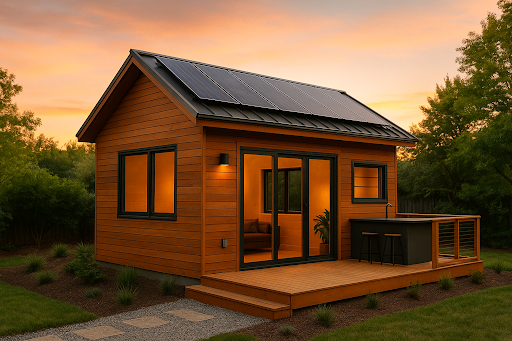
Why Backyard ADUs Are Exploding Right Now
The demand is real now.
Not hype.
People are building ADUs for:
- rental income
- Airbnb revenue
- aging parents
- adult children priced out of housing
- guest housing
- backyard offices
- multigenerational living
- retirement income
- long-term property value
Some homeowners are offsetting huge portions of their mortgage with rental income from an ADU.
Others are creating entirely new income streams from property they already own.
And cities are adapting because they need housing inventory badly.
California pushed this movement hard first, but now more states and counties are slowly following.
The market is becoming much more serious than it was even five years ago.
The Biggest Mistake People Make With ADUs
Most people shop for ADUs backwards.
They compare:
- photos
- finishes
- aesthetics
- trendy layouts
- appliance packages
before they compare:
- engineering
- structural quality
- trailer systems
- towing stability
- long-term durability
That’s a mistake.
Because an ADU is still a structure.
And in many cases, it’s a movable structure.
That means:
- load distribution matters
- axle placement matters
- crossmember spacing matters
- steel quality matters
- frame rigidity matters
Cheap trailer systems fail in predictable ways:
- sagging floors
- drywall cracking
- roof stress
- uneven doors
- towing instability
- frame flex
- premature corrosion
And once the house is fully built, repairing structural foundation issues becomes extremely expensive.
That’s why experienced builders focus on engineering long before they focus on aesthetics.
Because they’ve already seen what happens when corners get cut.
A Profitable ADU Has To Survive Long Term
This is where a lot of internet marketing completely falls apart.
Everybody talks about:
“passive income.”
Nobody talks enough about:
maintenance,
durability,
and long-term structural performance.
A profitable backyard rental still has to survive:
- tenants
- weather
- moisture
- utility usage
- transportation stress
- seasonal expansion and contraction
- years of occupancy
Weak construction gets exposed fast under real-world use.
Especially cheap trailer systems pretending to support residential structures.
We’ve seen people spend enormous money creating beautiful backyard units sitting on poorly engineered foundations.
Eventually the problems show up:
- wall movement
- flooring problems
- plumbing stress
- unstable towing
- moisture intrusion
- structural fatigue
That’s why long-term profitability starts with structural integrity.
Not decorative finishes.
Understanding The Real Cost To Build ADU Projects
Everybody asks:
“What does it cost to build an ADU?”
Fair question.
But there’s no honest universal number because every project is different.
The total cost depends on:
- utility hookups
- permit requirements
- location
- engineering
- materials
- labor
- trailer systems
- insulation packages
- customizations
- site prep
- towing requirements
- foundation planning
Some projects stay fairly simple.
Others become full custom housing systems.
The better question is usually:
“What creates the best long-term return?”
Because chasing the absolute cheapest build usually creates more expensive problems later.
The strongest investments tend to come from:
- good engineering
- durable materials
- efficient layouts
- low maintenance systems
- smart utility planning
- and properly designed foundations
The frame underneath the ADU may not be the exciting part…
but it quietly determines how well everything above it performs long term.
Why Trailer Engineering Matters So Much
This is where things get serious.
A lot of first-time buyers still think:
“the trailer is just underneath the house.”
No.
The trailer IS the structural platform.
Every pound above the floor transfers through that frame.
That means poor engineering creates chain reactions:
- tire wear
- unsafe towing
- frame flex
- structural fatigue
- cracking finishes
- moisture problems
- long-term durability issues
Tiny homes and ADUs behave very differently than cargo trailers or utility haulers.
The weight distribution is different.
The wind resistance is different.
The long-term residential stress is different.
That’s why Trailer Made became respected nationally for engineered trailer systems specifically designed around tiny homes and ADUs instead of generic utility trailer designs pretending to support housing.
That distinction matters.
Especially over time.
ADU Building Permits Are Still Frustrating
Honestly?
This part frustrates almost everybody.
ADU permits vary wildly depending on where you live.
Some cities are becoming very ADU-friendly.
Others still move painfully slow.
And sometimes two departments inside the same city don’t even agree with each other.
That’s the reality.
You may run into:
- setback rules
- parking requirements
- sewer tie-ins
- utility regulations
- occupancy limits
- electrical requirements
- zoning restrictions
- foundation requirements
This is where experienced ADU builders become extremely valuable.
Not just because of construction knowledge.
Because they understand how permitting departments and inspectors actually think.
That’s a completely different skill set.
Trailer Made spent years involved in:
- engineering discussions
- code conversations
- industry education
- and tiny house legalization efforts
because this industry desperately needed real structural standards.
That experience matters.
Prefab ADUs vs Custom Backyard Builds
This conversation comes up constantly.
And honestly?
Neither option is automatically better.
Prefab ADUs can offer:
- faster timelines
- controlled manufacturing
- more predictable production
- reduced labor involvement
Custom ADUs offer:
- flexibility
- layout customization
- property-specific planning
- accessibility solutions
- unique rental optimization
The smart move is designing around your actual use case instead of copying something trendy online.
A profitable ADU should prioritize:
- livability
- durability
- maintenance simplicity
- tenant comfort
- energy efficiency
- long-term reliability
Not just Instagram aesthetics.
The Airbnb Side Of Backyard ADUs
A lot of homeowners are chasing short-term rental income right now.
Sometimes it works extremely well.
But Airbnb-style usage creates very different wear patterns than long-term tenants.
More:
- turnover
- cleaning
- moisture
- furniture movement
- utility usage
- abuse on finishes
Which means durability matters even more.
Weak construction gets exposed fast under heavy guest turnover.
The stronger builds quietly keep performing year after year.
That’s why experienced builders obsess over:
- flooring durability
- insulation systems
- moisture management
- structural stability
- and long-term serviceability
Good engineering reduces future headaches substantially.
Buyers Are Asking Better Questions Now
This industry is maturing.
Five years ago, buyers mostly asked:
- How does it look?
- How big is it?
- What are the finishes?
Now people ask:
- How is the weight distributed?
- What steel is used?
- How does the trailer handle towing stress?
- What happens after years of use?
- How does it perform in wet climates?
- How is the frame engineered?
Those are the right questions.
Because the market has already seen enough horror stories.
People are getting smarter.
And honestly, that’s good for the industry.
What Actually Makes An ADU Profitable?
Not just rent collection.
Real profitability usually comes from:
- strong engineering
- low maintenance
- efficient layouts
- durable materials
- reliable utility systems
- tenant-friendly design
- and long-term structural performance
A beautiful unit that constantly creates repair bills is not a good investment.
A well-built unit quietly producing stable income for years?
That’s a good investment.
Huge difference.
Build It Right The First Time
There are plenty of ways to build an ADU.
Far fewer ways to build one that stays:
- profitable
- structurally sound
- towable
- durable
- and reliable long term
That’s the part most people learn after they’ve already made expensive mistakes.
Whether you’re building:
- a backyard rental
- an Airbnb
- a guest house
- an office
- housing for family
- or a long-term income property
…the foundation underneath the structure deserves serious attention.
Because once you understand the amount of stress these systems endure over years of use, cheap shortcuts stop looking attractive very quickly.
If you’re serious about building smarter — not just cheaper — start with the engineering first.